Blog
Guides, use cases, and field notes for designing QR codes that work — written by the team building QRA.
- MENA Moat
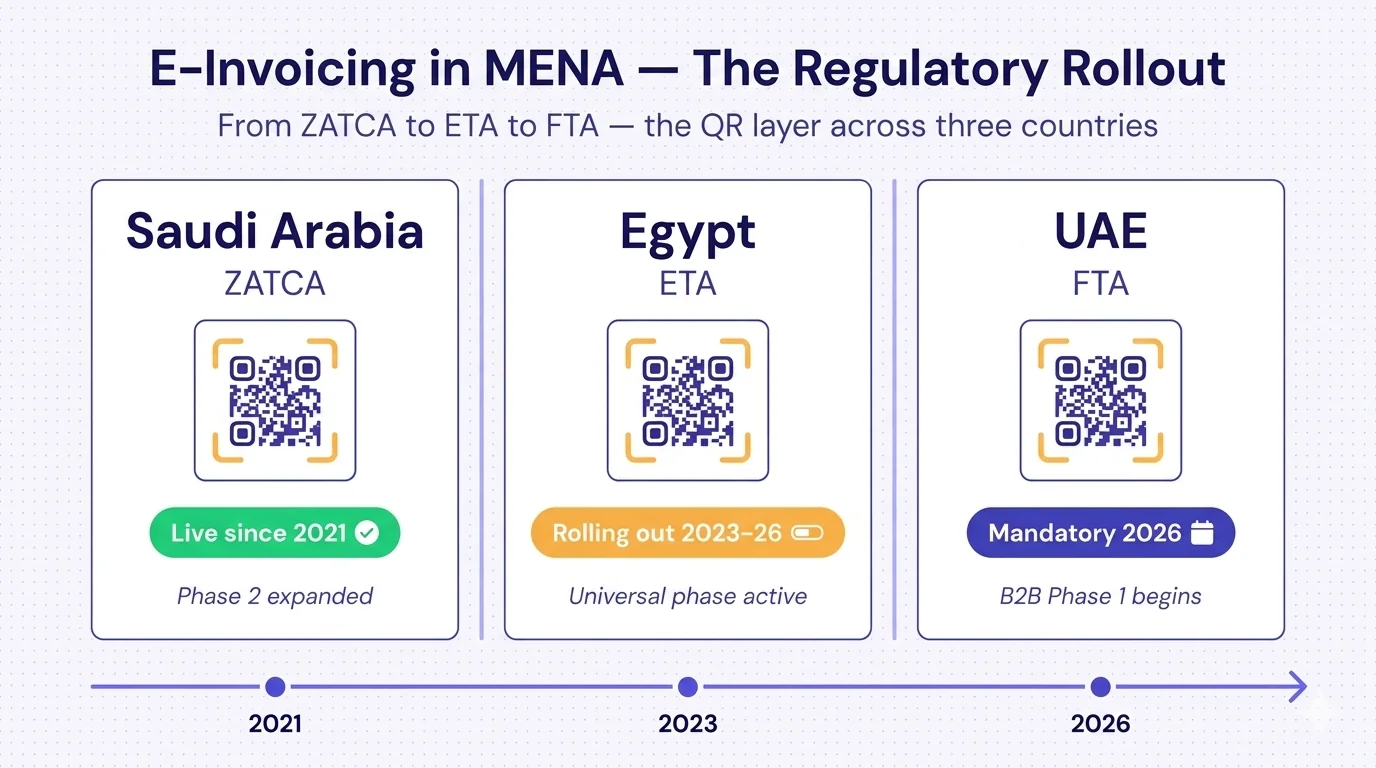
E-Invoicing in MENA Beyond Saudi Arabia: Egypt's Universal Phase, UAE's 2026 Mandate, and the QR Layer Across the Regional Rollout
Saudi Arabia's ZATCA Phase 2 (covered in detail in our earlier piece) was the first wave. The regional wave is now larger: Egypt's ETA universal-phase rollout is hitting every VAT-registered company through 2026, UAE's FTA mandatory e-invoicing begins for VAT-registered businesses in 2026, Bahrain and Kuwait are in consultation, and Iraq is exploring frameworks. Each country uses a different regulator, a different invoice format, a different QR encoding, and a different clearance model — but they all share one structural feature: a QR code on every issued invoice that contains the regulator-verifiable hash of the invoice payload. This is the cross-country playbook: how ZATCA, ETA, and FTA differ in their QR specification; what the technical migration path looks like for B2B companies operating across multiple MENA countries; the integration patterns with the underlying e-invoicing platforms; the timeline through 2027; and the eight mistakes that turn an e-invoicing rollout into a regulatory penalty.
- Use Cases
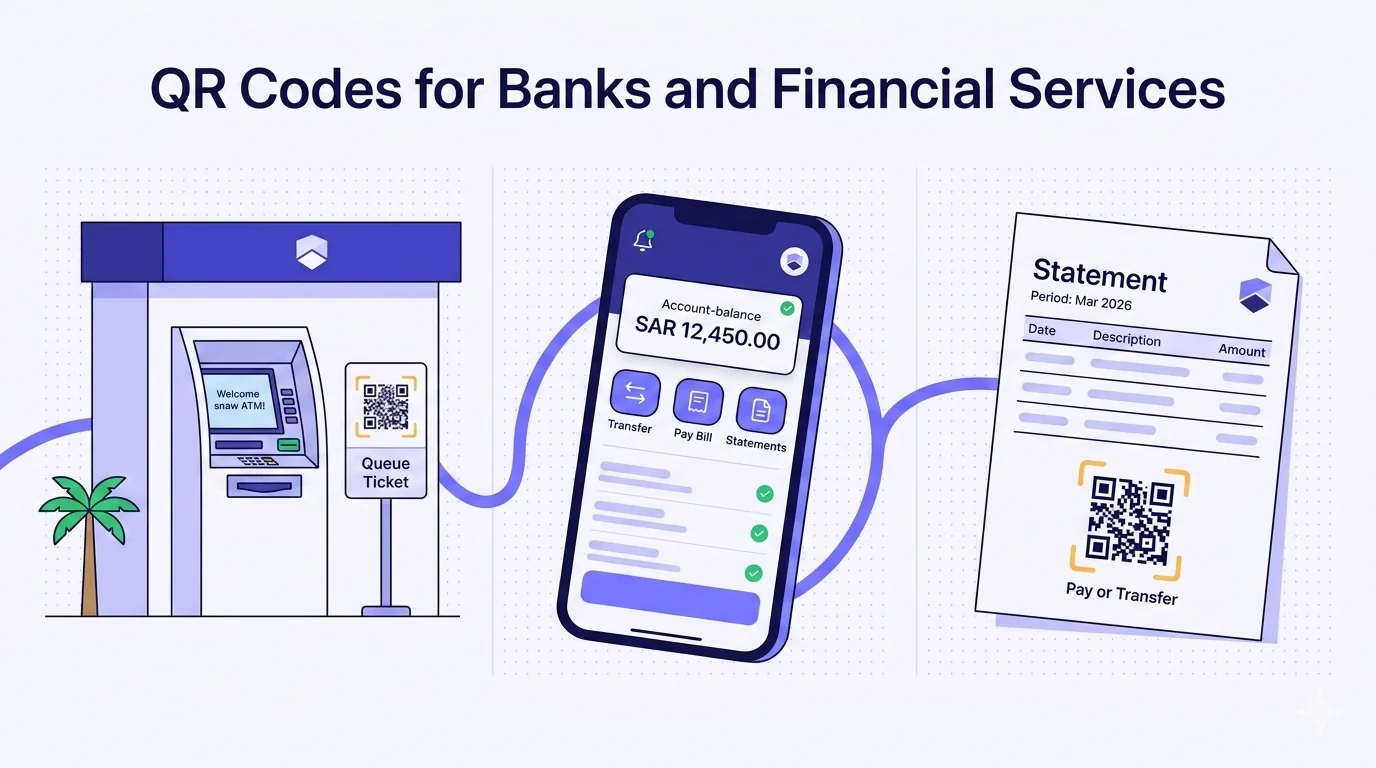
QR Codes for Banks and Financial Services: ATM Queue, KYC, Statements, IBAN Sharing, and the MENA Open-Banking Playbook
Banks print billions of statements, operate thousands of ATMs, and serve hundreds of millions of mobile-banking customers across MENA. Every one of those touchpoints is a candidate for a QR — done right, QR routes ATM queues into the mobile app, embeds pay-this-bill actions into printed statements, lets customers share IBANs without typing 24 digits, and shortcuts KYC document submission from days to minutes. Done wrong, it leaks customer data, gets impersonated by financial quishing, and trains customers to scan every QR they see including the fake ones. This is the full banking-QR playbook: ten use cases across the customer journey, the SAMA / CBUAE / CBE / CBK regulatory layer, the open-banking integration patterns, the Vision 2030 banking-sector reform context, the anti-quishing posture banks specifically need, and the eight mistakes that turn a useful banking QR into a regulatory incident.
- How-To
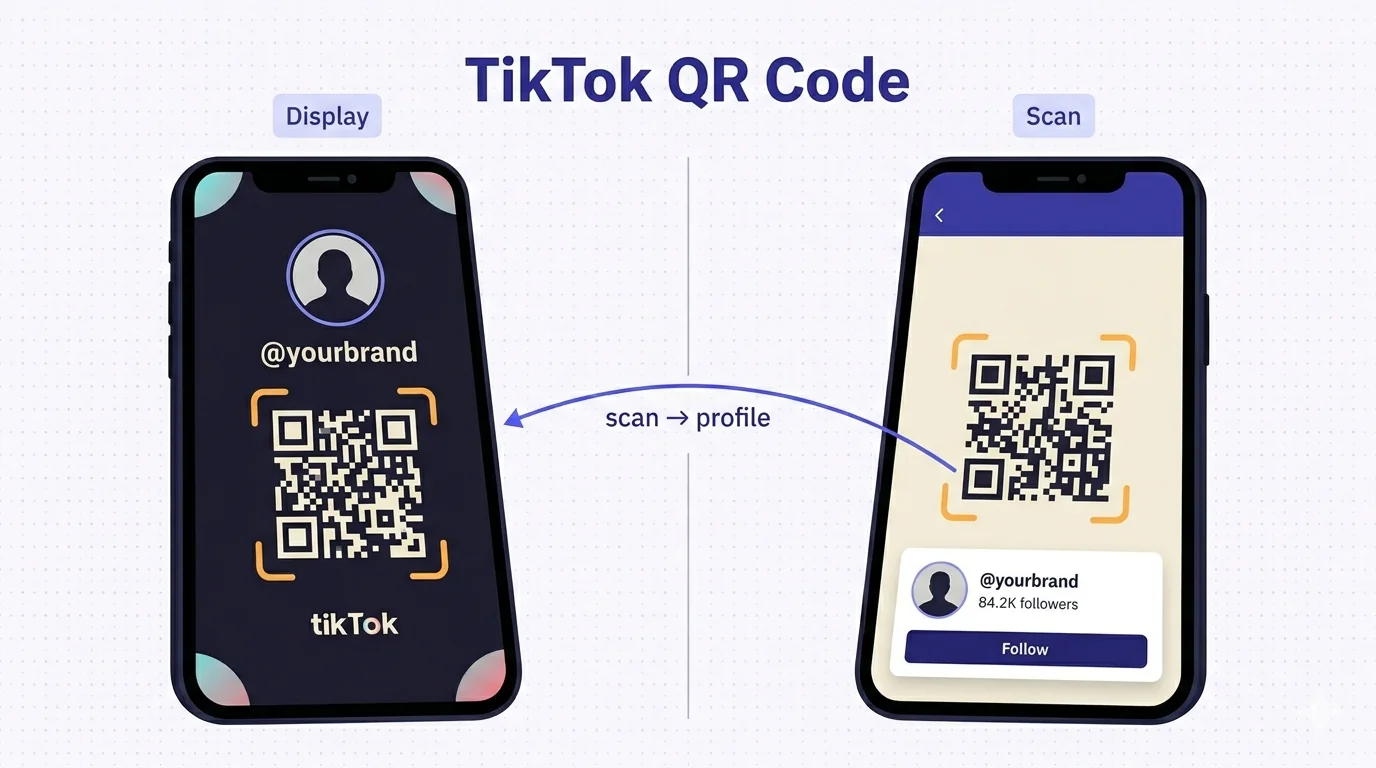
TikTok QR Code: Profile Share, Video Embed, and the MENA Short-Form Creator Playbook
TikTok's built-in profile QR is a white square that pops out of the share sheet, points at one place (your profile), and gives you no data on who scanned, when, where, or whether they followed. For casual creators that's fine; for the Khaleeji food vloggers, Cairo comedians, Saudi lifestyle TikTokers, and MENA brands running short-form video at scale, it leaves the entire optimisation layer untouched. This is the TikTok-QR playbook: how the native white-square QR works, the four TikTok-related QR types (profile share, video share, Stitch/Duet collaboration prompt, TikTok Shop), why TikTok's link restrictions make branded dynamic QR more valuable than on Instagram, the MENA creator-economy moves that change the playbook, and the eight common mistakes that kill TikTok-QR conversion.
- Troubleshooting
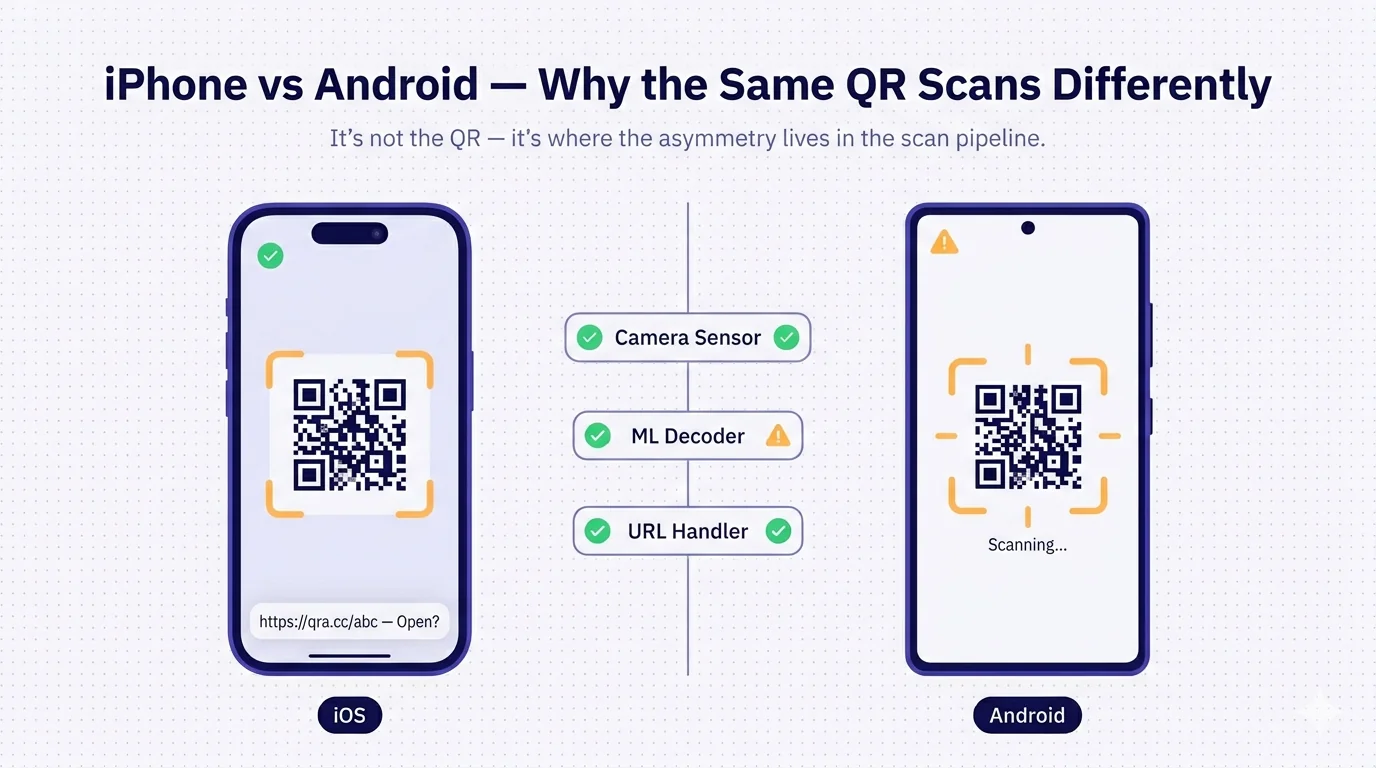
iPhone vs Android QR Scanning: Why the Same QR Sometimes Works on One Phone but Not the Other
Every designer's nightmare: the QR scans cleanly on the designer's iPhone, the print run ships, and two weeks later the customer-support inbox fills up with 'I can't scan it' messages — almost all from Android users. The QR is not broken. The decoding pipeline is asymmetric. iPhone's ML decoder is permissive; Android's is stricter (and fragmented across vendors). For MENA businesses where Android is ~70% of the install base, designing for iPhone-only testing is leaving most of the market unscannable. This is the full technical explainer: where in the pipeline the asymmetry lives, why error-correction H and a 4-module quiet zone are non-negotiable, the mid-range Android test rule, and the eight design moves that make QRs work on every phone.
- How-To
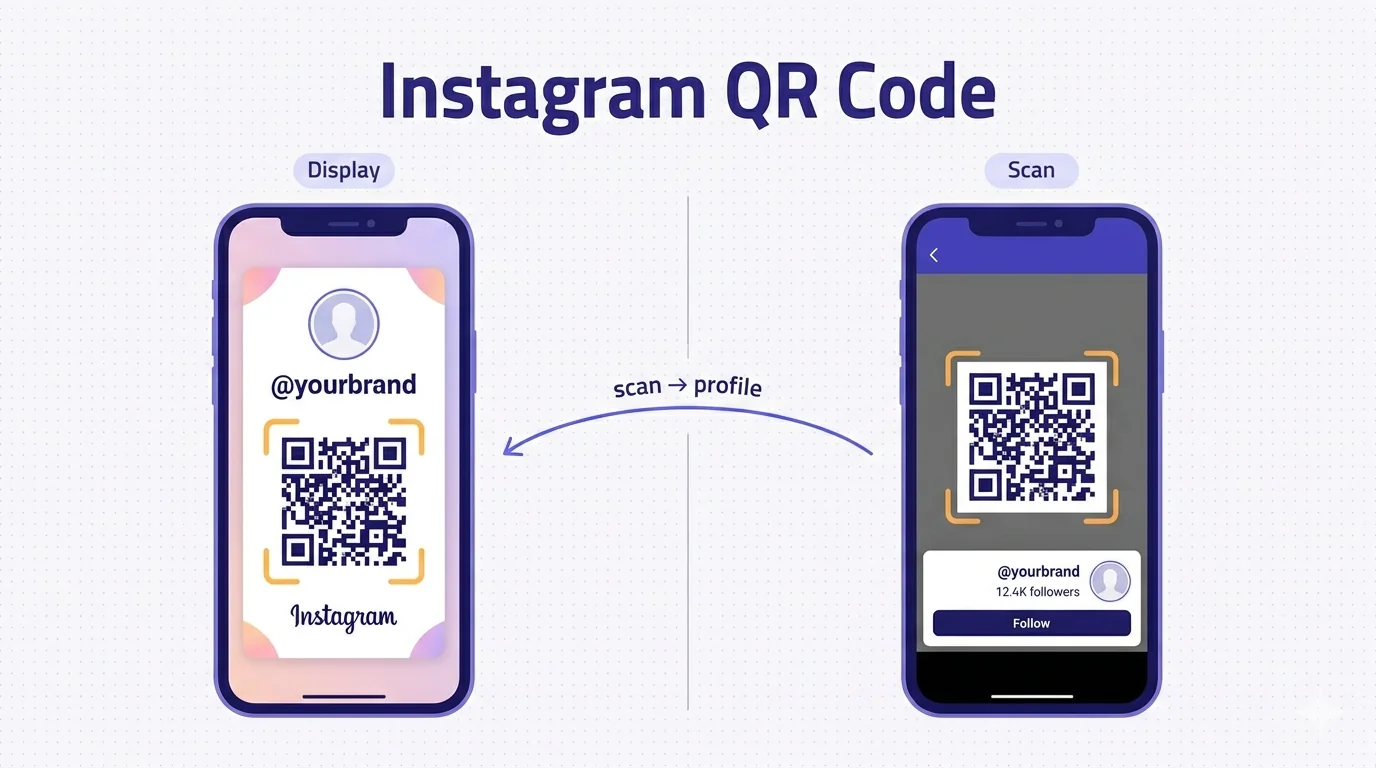
Instagram QR Code: Profile Nametags, Stories, Reels, and the MENA Creator Playbook
Instagram has a built-in QR feature (the Nametag, now updated to 'QR code'), but it's unbranded, unanalysable, and locked to one destination. For MENA creators, retailers, hospitality brands, and the booming Khaleeji creator economy — which runs almost entirely on Instagram — the built-in QR leaves real money on the table. This is the full Instagram-QR playbook: how the native nametag works and where it falls short, the five Instagram-related QR types (profile, Story sticker, Reels share, business contact, link-in-bio), branded dynamic QR codes that route through Instagram instead of being trapped inside it, the MENA creator-economy moves (Ramadan campaigns, Khaleeji-influencer collaboration QRs, Arabic-handle considerations), and the eight common mistakes that kill Instagram QR conversion.
- Use Cases
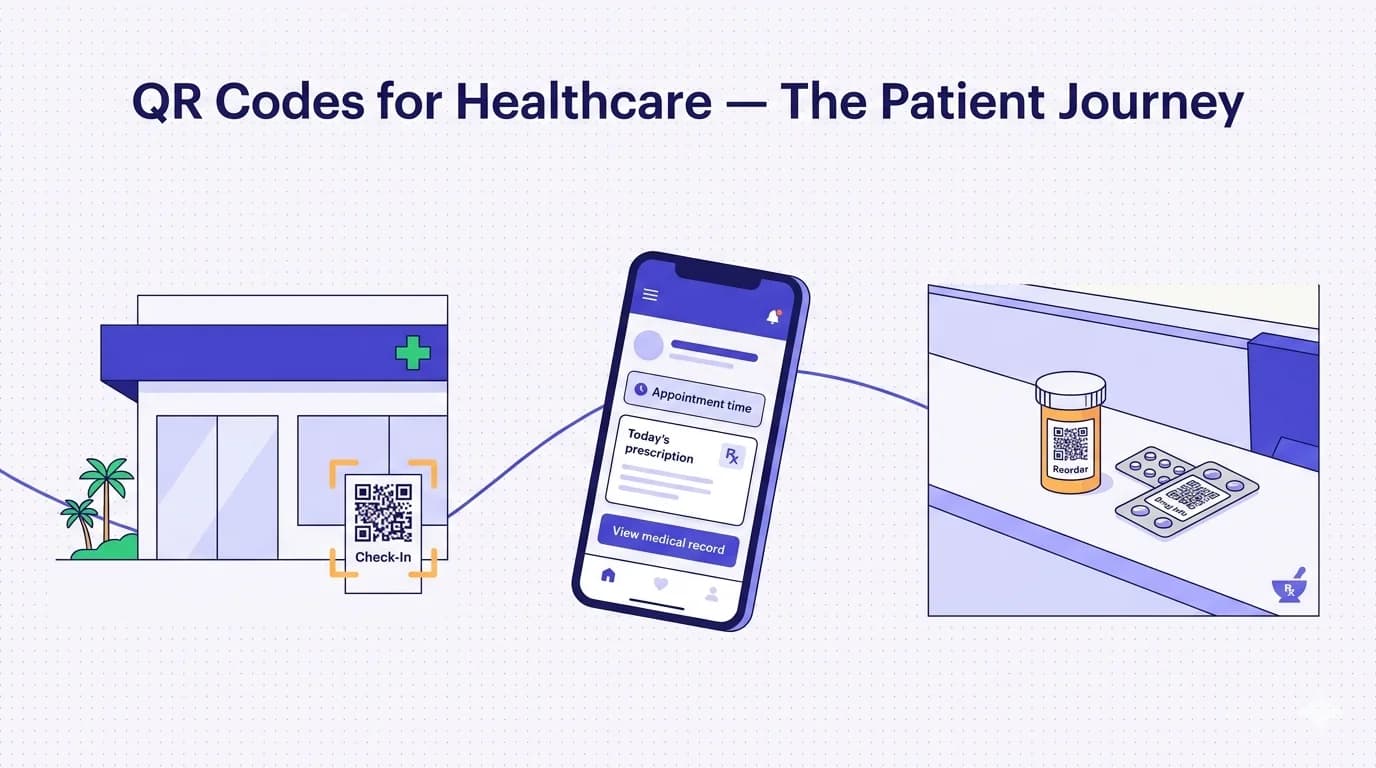
QR Codes for Healthcare: Hospitals, Clinics, Pharmacies, and the Patient-Journey Playbook
Healthcare is a sector where the same patient touches the system again and again — check-in, consultation, prescription, follow-up, refill. Every one of those touches is a candidate for a QR. Done right, QR cuts queue time at reception, replaces paper appointment slips, anchors digital prescriptions to physical packs, lets pharmacies route refill requests in one tap, and surfaces drug information in the patient's own language. Done wrong, it leaks patient data, gets impersonated by quishing, and trains patients to scan everything indiscriminately. This is the healthcare playbook: ten patient-journey placements, the compliance moves (PDPL, NPHIES, e-prescription integrity), the MENA-specific angles (Vision 2030 healthcare reform, UAE Mohap, Egypt UHIA), and the eight mistakes that turn a useful QR into a privacy incident.
- Troubleshooting
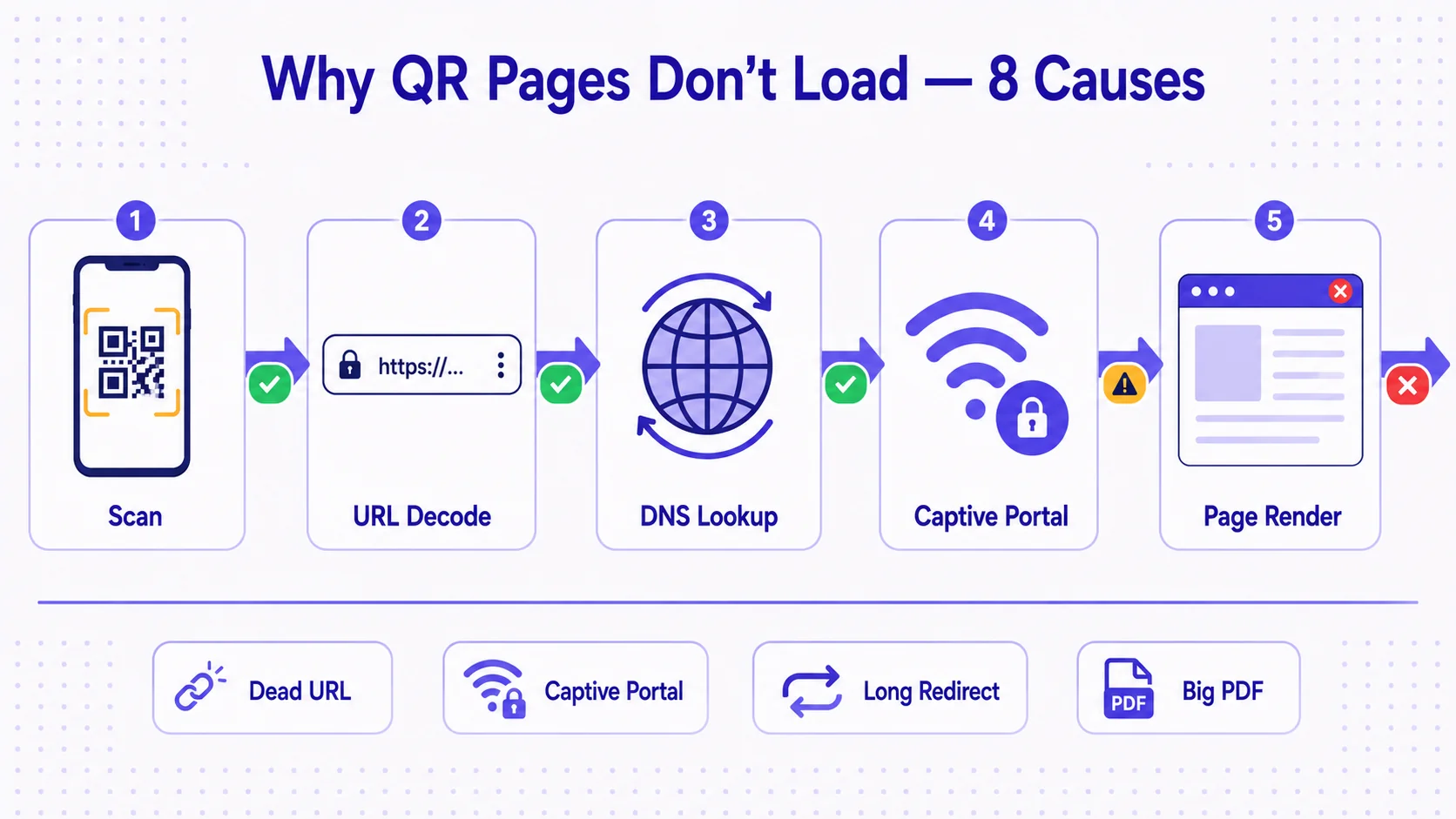
QR Scanned But Page Won't Load: 8 Causes and the Fixes
Your QR works — the phone reads it, the URL appears, the user taps — and then nothing happens. The page hangs, returns 404, or shows a 'no internet' error even though the phone is online. This is a destination-side failure, not a QR-side one, and it's the second-most-common QR complaint after scanning failures. Eight causes (dead URL, captive portal, geo-block, HTTP-vs-HTTPS, DNS, long redirect chain, oversized PDF, login-gated destination), the fix for each, and what to test before you print.
- QR Basics
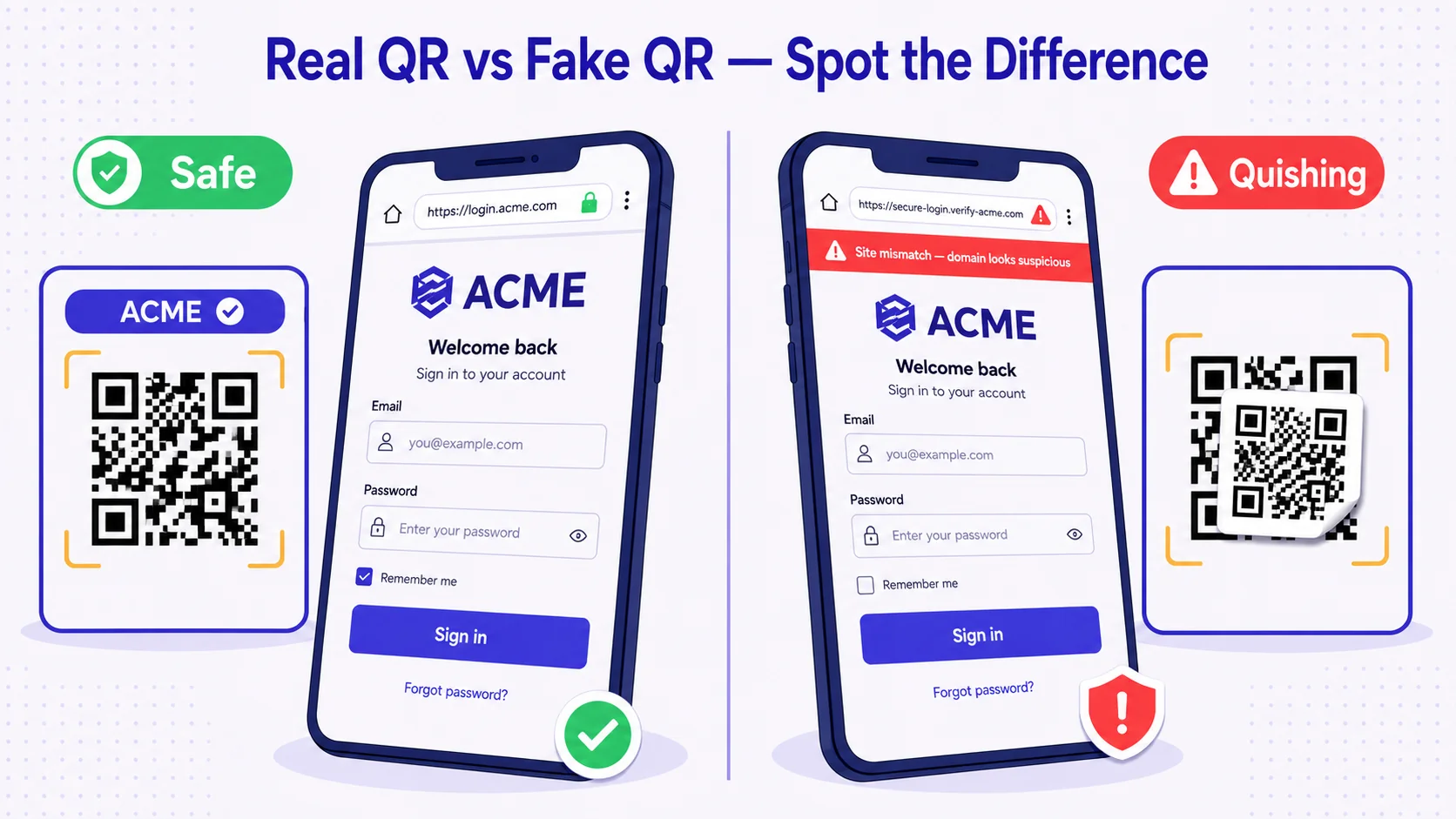
Are QR Codes Safe? Spotting Quishing and QR Phishing Scams in 2026
A QR code is just a URL container — the safety question is what URL it points to. Quishing (phishing via QR) tripled in 2025: stickers slapped over parking meters, fake login pages, mada/STC Pay scams, donation QRs around Ramadan. Here's how the four attack patterns work, the 5-step check before you tap, and how branded dynamic QRs make impersonation visible.
- QR Basics
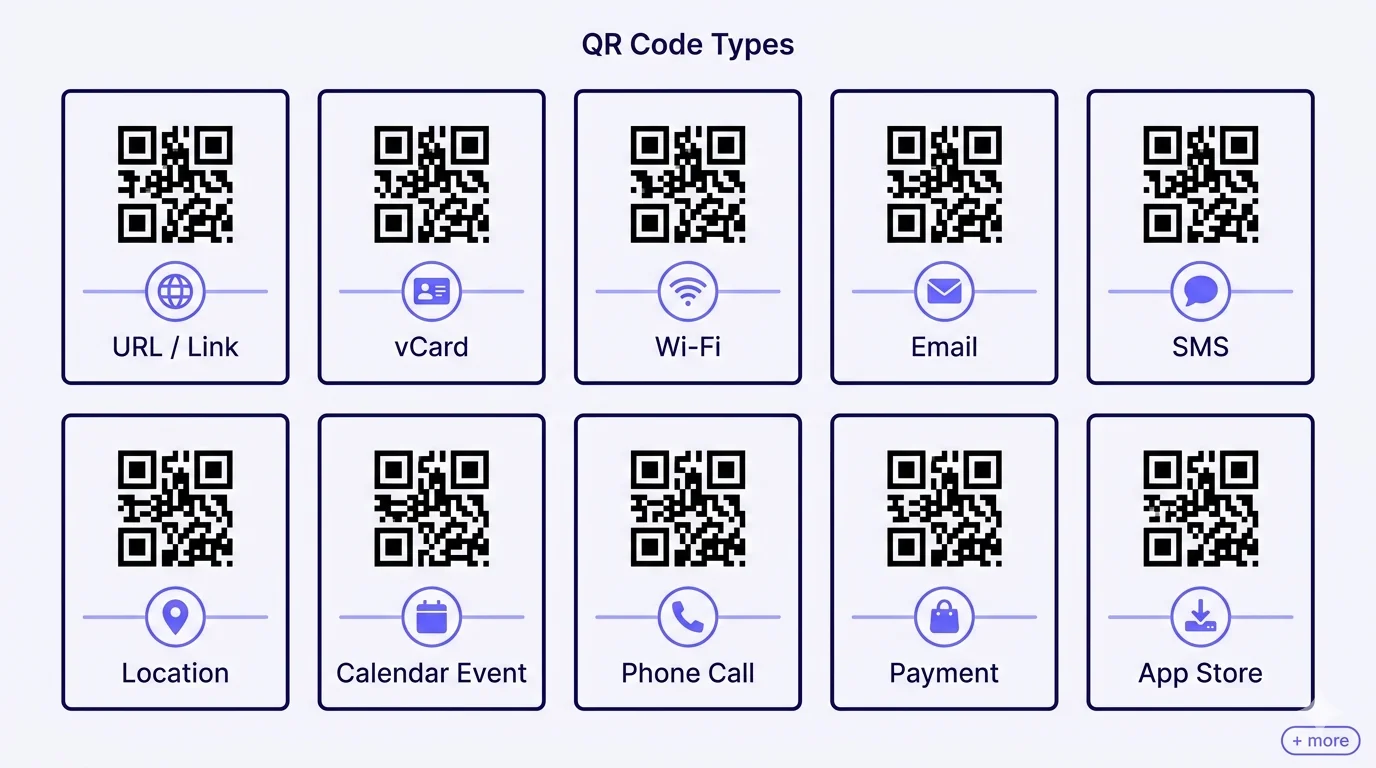
Types of QR Codes Explained: URL, vCard, Wi-Fi, Email, SMS, Location, Calendar, Phone, Payment, App Store
Most people think of QR codes as 'the thing that opens a website'. URL is one type — and the most common. There are at least nine others worth knowing: vCard for digital business cards, Wi-Fi for one-tap network join, Email and SMS for pre-filled messages, Location for navigation, Calendar for event invites, Phone for one-tap dialling, Payment for transactions, App Store for installs. This is the catalog — what each type does, when to use it, and the practical gotchas per type.
- Use Cases
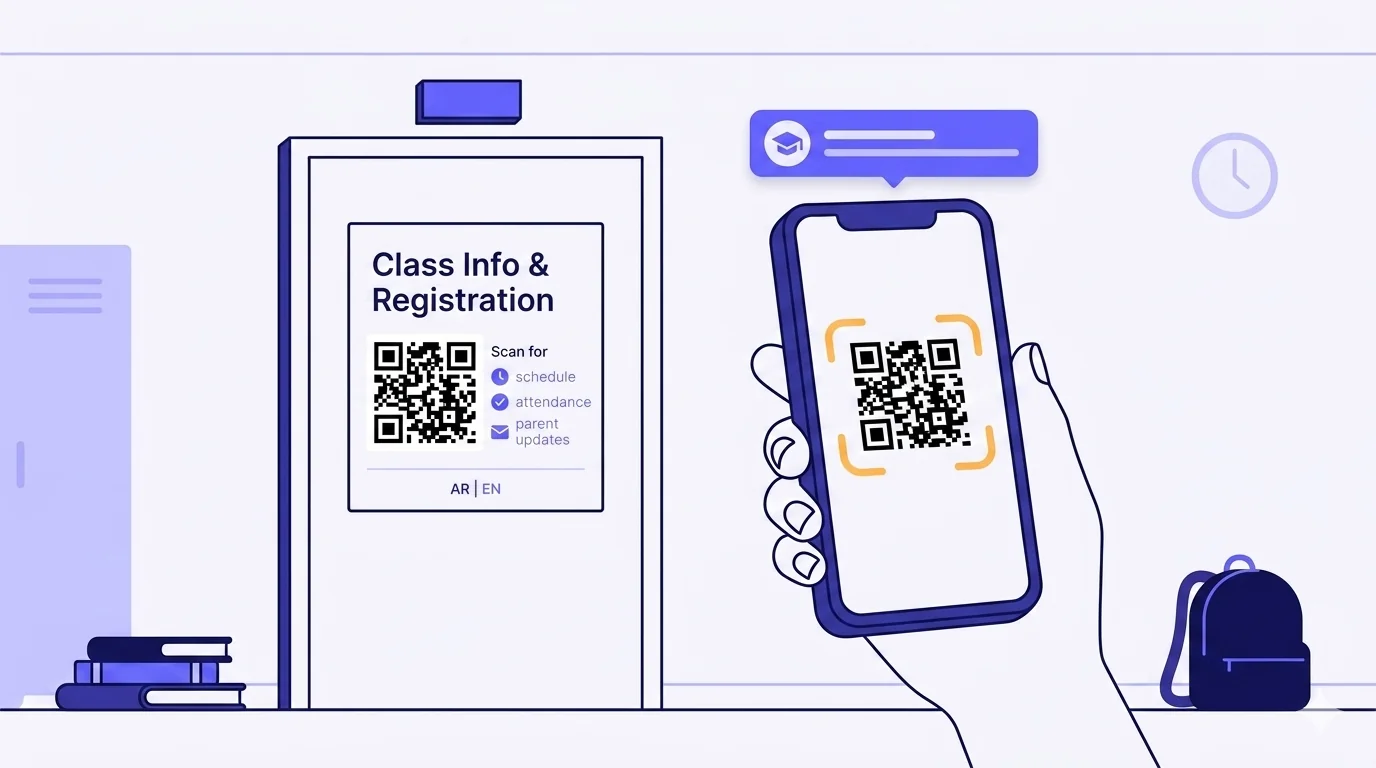
QR Codes for Schools and Universities: A MENA Education Playbook
Schools across MENA — public and private, K-12 and university, Arabic-medium and English-medium — are quietly becoming QR-native. Registration QRs on enrolment packets, classroom-door QRs for parent updates, library-shelf QRs for digital companions, attendance QRs that replace paper rolls. Egypt's massive K-12 system, Saudi Arabia's Vision 2030 education modernisation, UAE's international school network, and a hundred private universities across the region are all moving in the same direction. Here's the playbook.
- MENA Insights
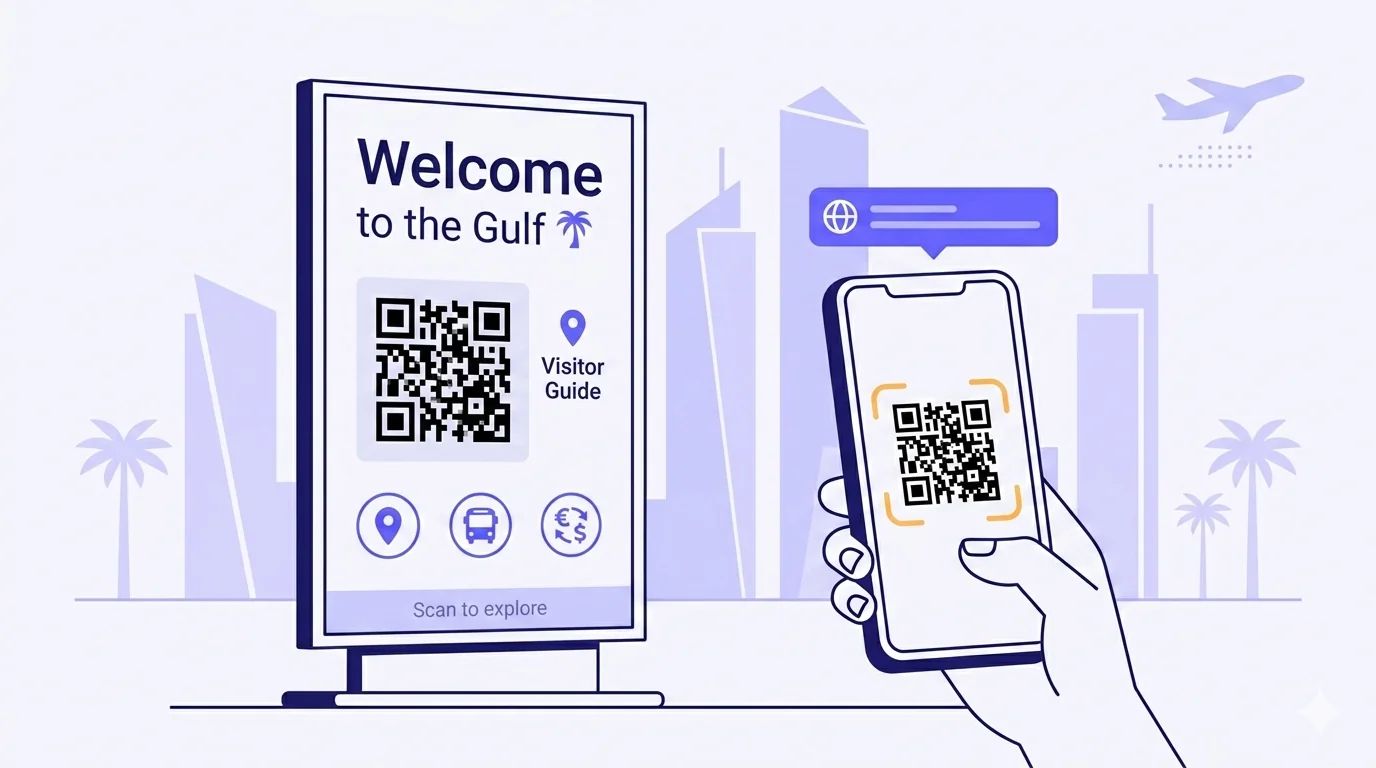
QR Codes and the GCC Tourism Boom: How Hotels, Attractions, and Transport Hubs Should Be Using Them
Saudi Arabia is investing $1+ trillion in tourism infrastructure under Vision 2030, targeting 150M annual visitors. The UAE is consistently a top global destination. Qatar's post-FIFA-WC visitor momentum continues; Oman, Bahrain, and Kuwait all have parallel tourism strategies. Every arriving visitor brings a phone, speaks a different language, and expects multilingual digital touchpoints — and the QR is the simplest infrastructure to deliver them. Here's how GCC hotels, attractions, transport hubs, and visitor-facing businesses should actually be using QR.
- How-To Guides
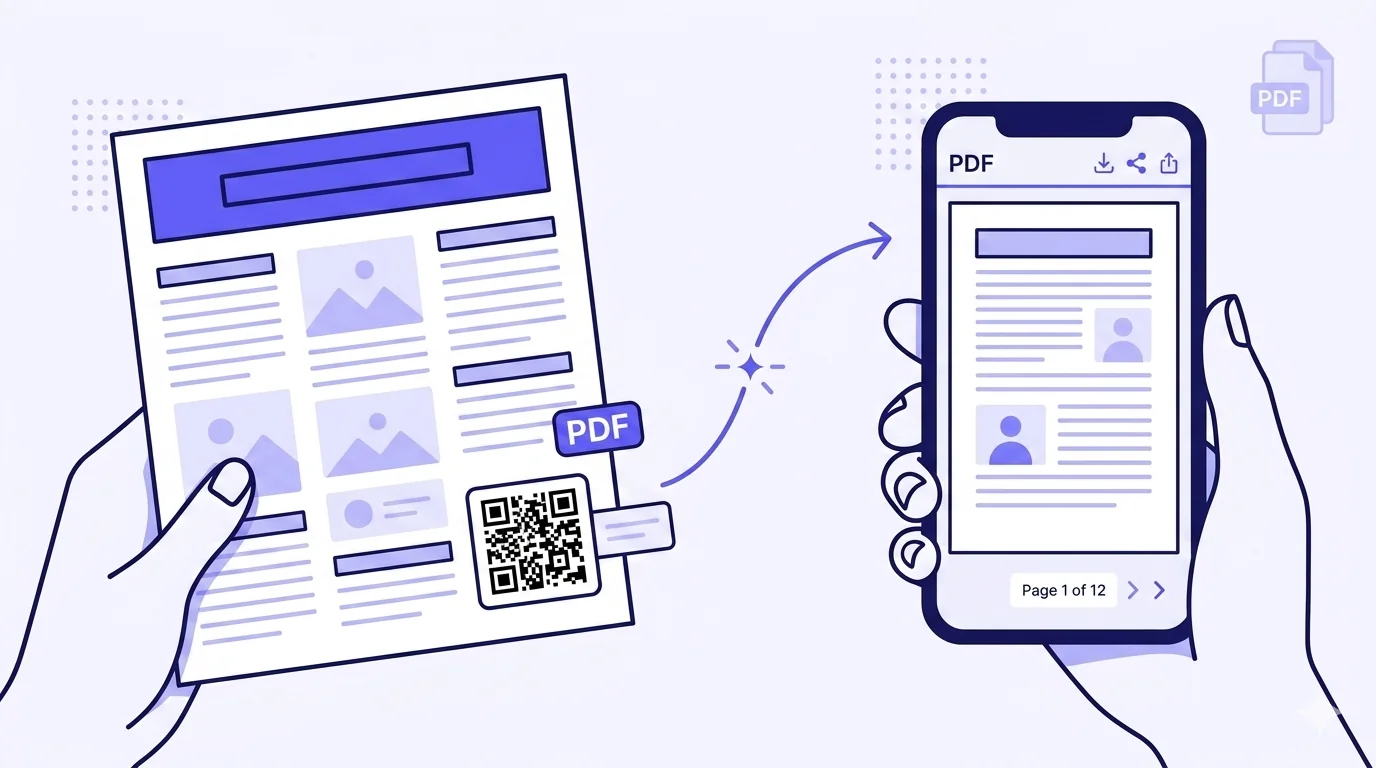
How to Make a QR Code for a PDF (And Why Most People Do It Wrong)
Scan a QR, the PDF opens on the phone — it sounds simple. The wrong way is to upload the PDF to a free Drive/Dropbox link, encode that URL into a static QR, and lose access the moment the file moves or the free tier expires. The right way is to host the PDF on stable infrastructure, point a dynamic QR at it, and swap the file over time without reprinting. Here's the full setup including the Arabic-PDF rendering edge cases.
- Troubleshooting
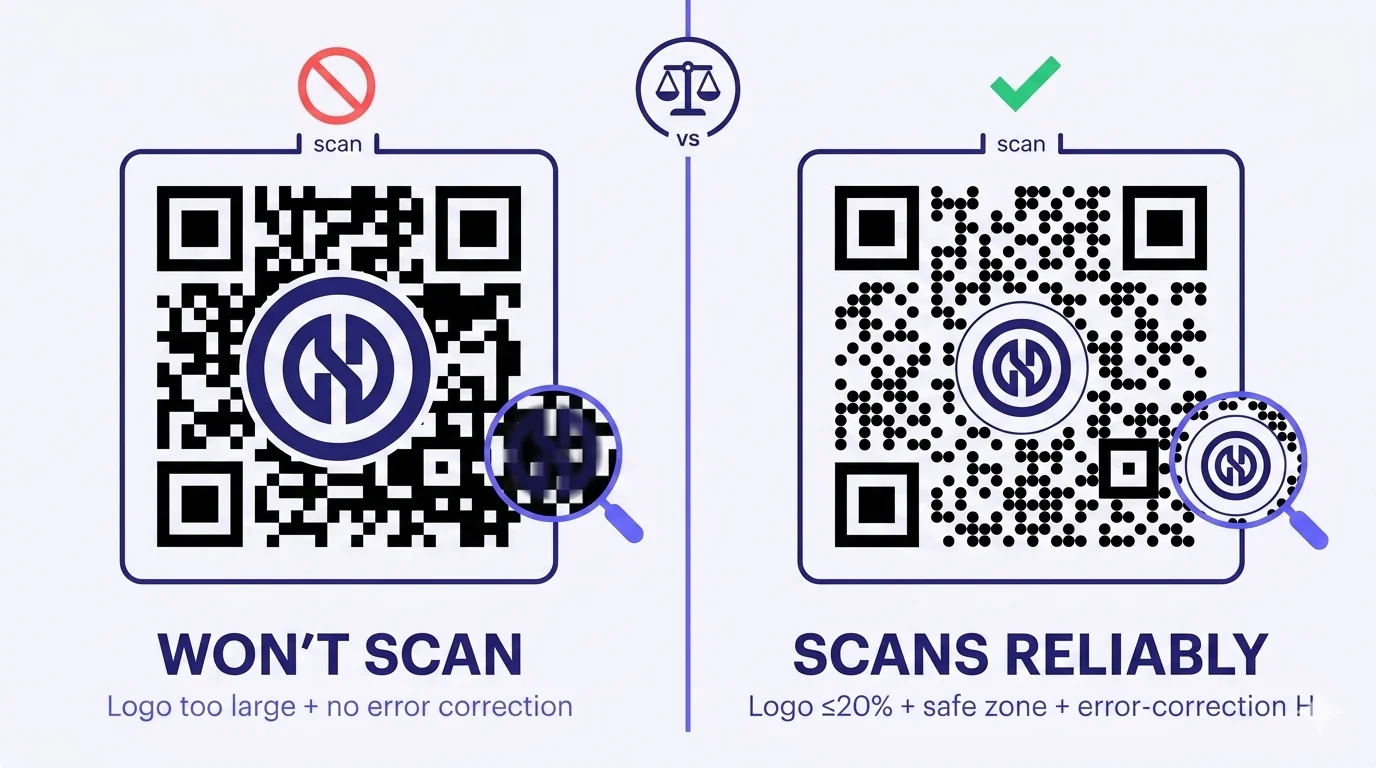
Why Your Custom-Logo QR Code Won't Scan (And How to Fix It Without Removing the Logo)
Branding teams add a logo to the QR centre, the design feels on-brand, the QR scans on the designer's iPhone, the print run goes out — and then 30% of customers can't scan it. The logo isn't the problem; the logo size, the safe-zone, and the error-correction level are. Here's exactly why custom-logo QRs fail and the three-rule fix that works without removing the logo.
- Use Cases
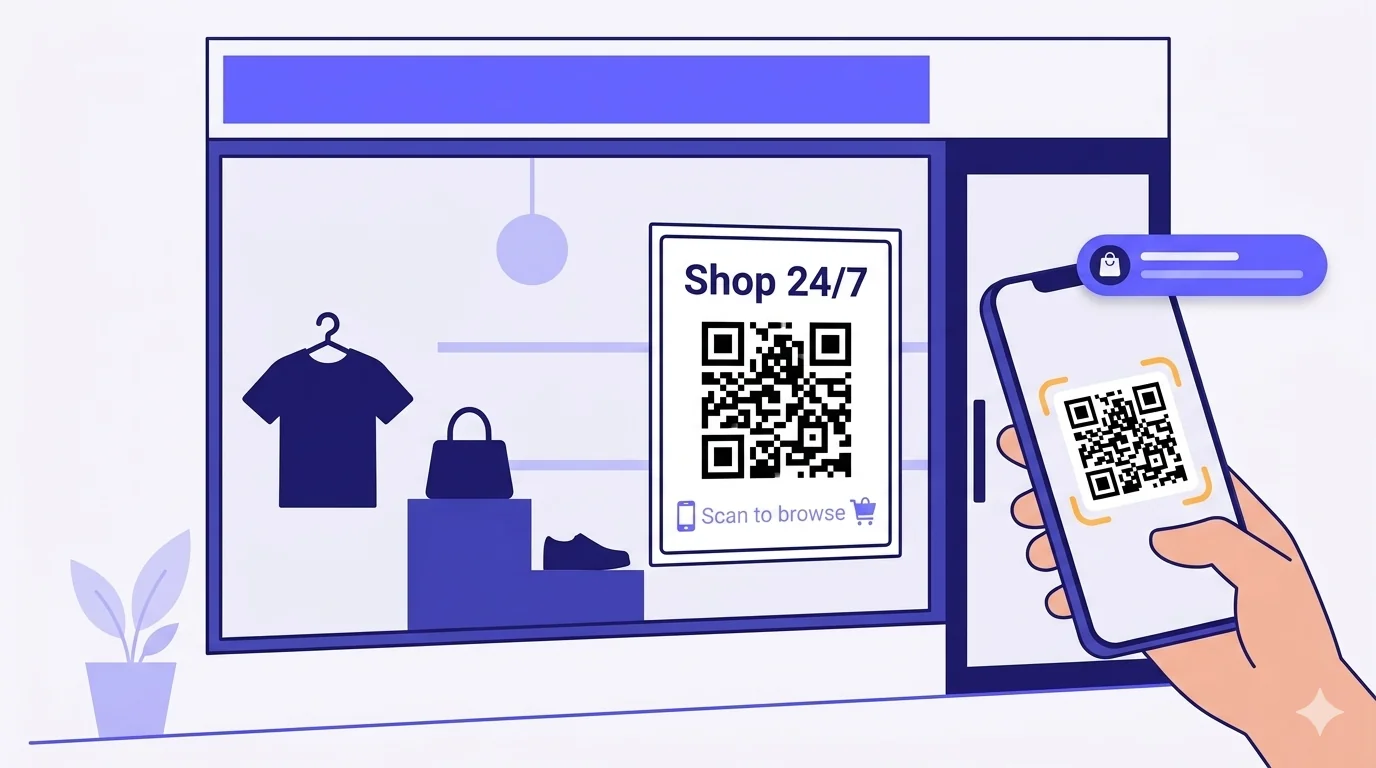
QR Codes for Retail Stores and Shop Windows: A MENA Playbook
A QR on your shop window turns every passer-by into a potential customer at 11 PM, on a Friday afternoon, on a public holiday — any time the shop is closed but the catalogue is open. A QR on a shelf-edge label or a fitting-room mirror turns hesitation into action. A QR on a product tag turns a single-product purchase into a multi-channel relationship. Here's how MENA retailers — from Riyadh Boulevard to Casablanca medina shops — actually use them.
- How-To Guides
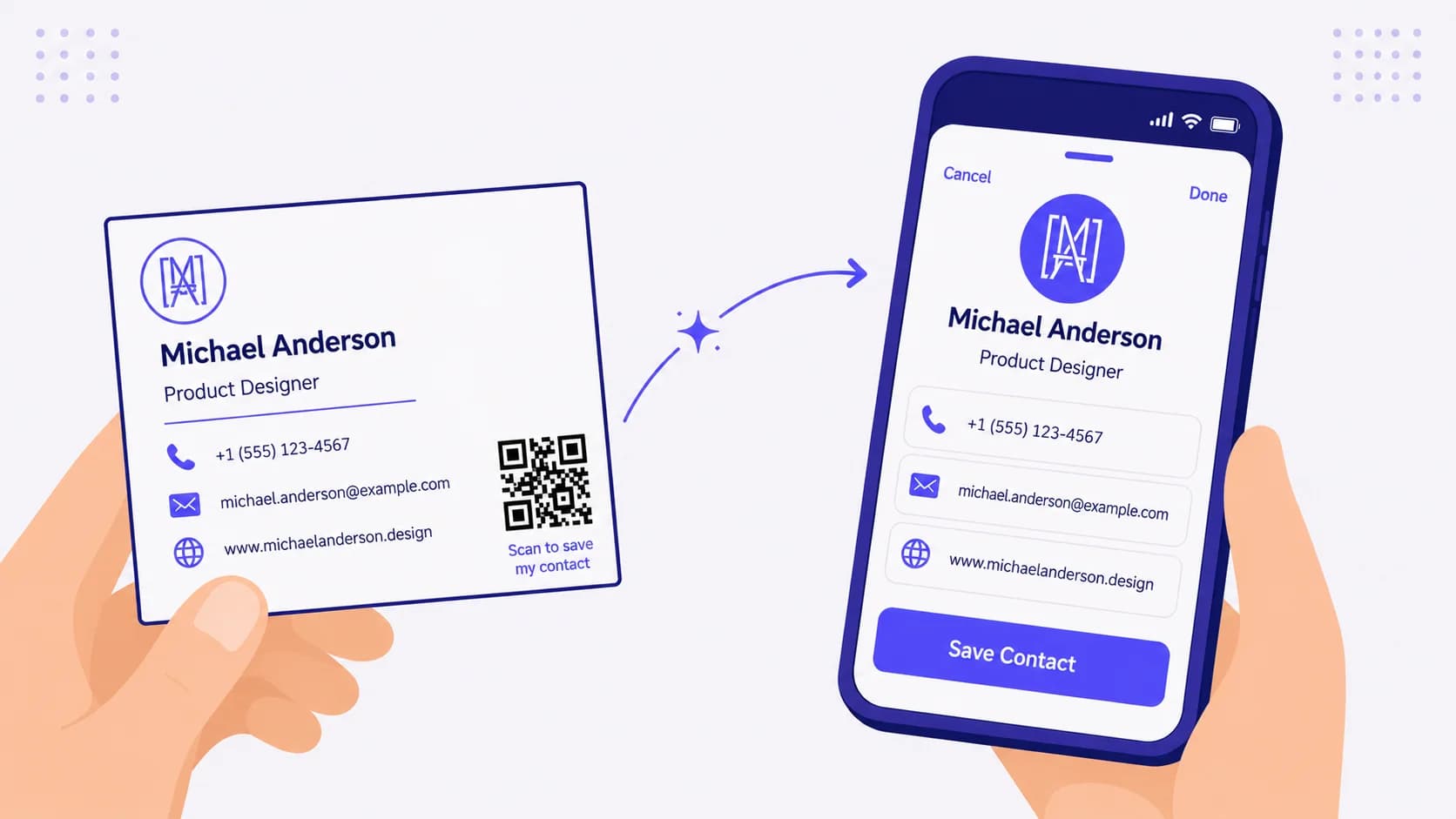
vCard QR Codes: The Complete Guide to Digital Business Cards
A vCard QR turns a printed business card into a one-tap contact save. Hold your phone over the QR, tap the prompt, your contact card appears in their phone's contacts app — name, title, phone, email, website, photo, the works. Here's how it works, what to encode, the Arabic-name and RTL contact edge cases, and why dynamic vCard QR is one of the most underused QR upgrades in MENA.
- MENA Insights
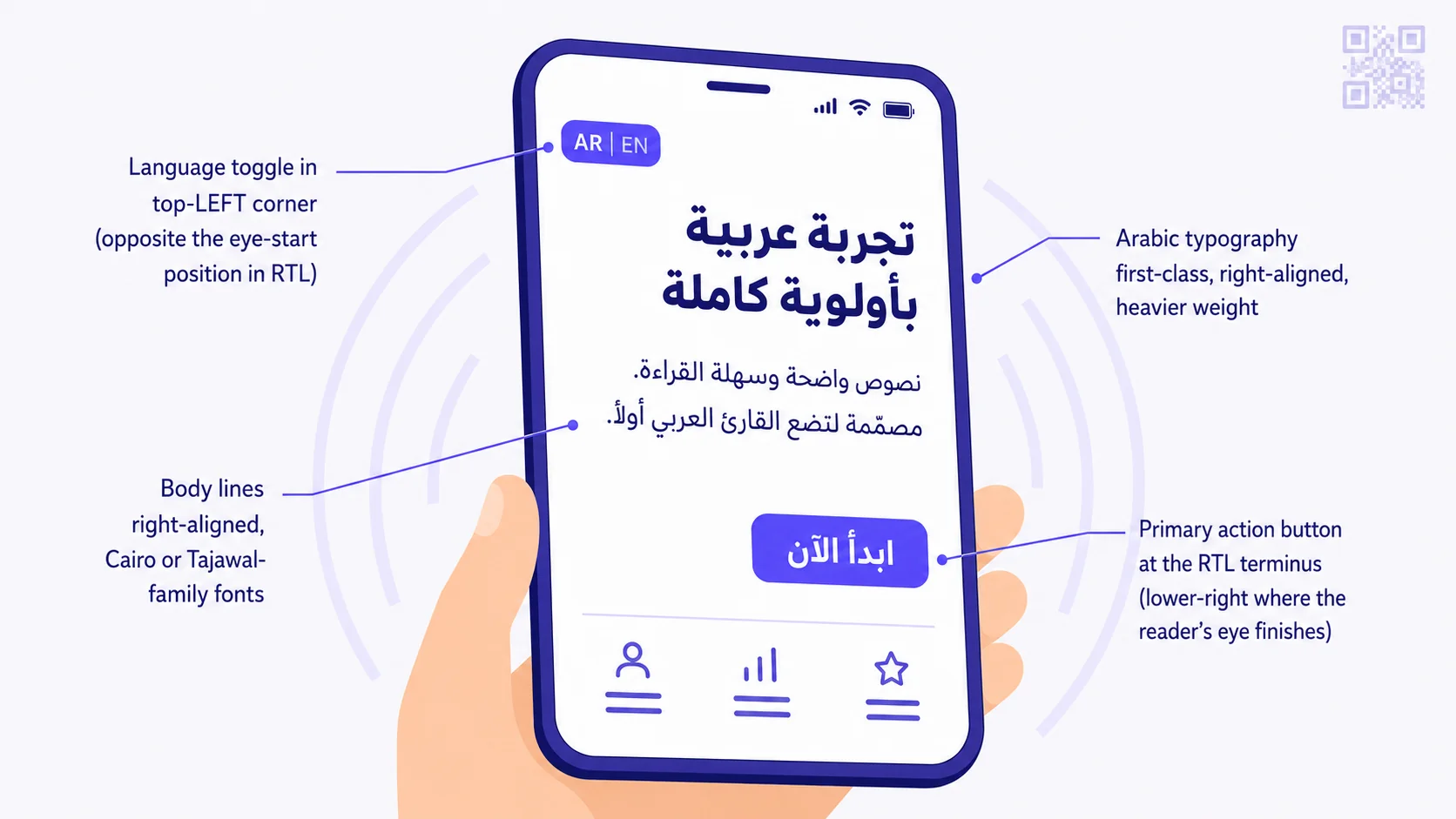
Arabic-First Landing Pages: How QR Destinations Should Be Designed for MENA
Most QR destination pages built for MENA visitors are English-default with an Arabic toggle bolted on as an afterthought. They scan correctly. They convert poorly. Arabic-first design isn't translation — it's typography, layout, eye-flow, button placement, and form behaviour treated as first-class for Arabic readers. Here's how it differs from translated-from-English design, and why the conversion numbers move when you get it right.
- QR Basics
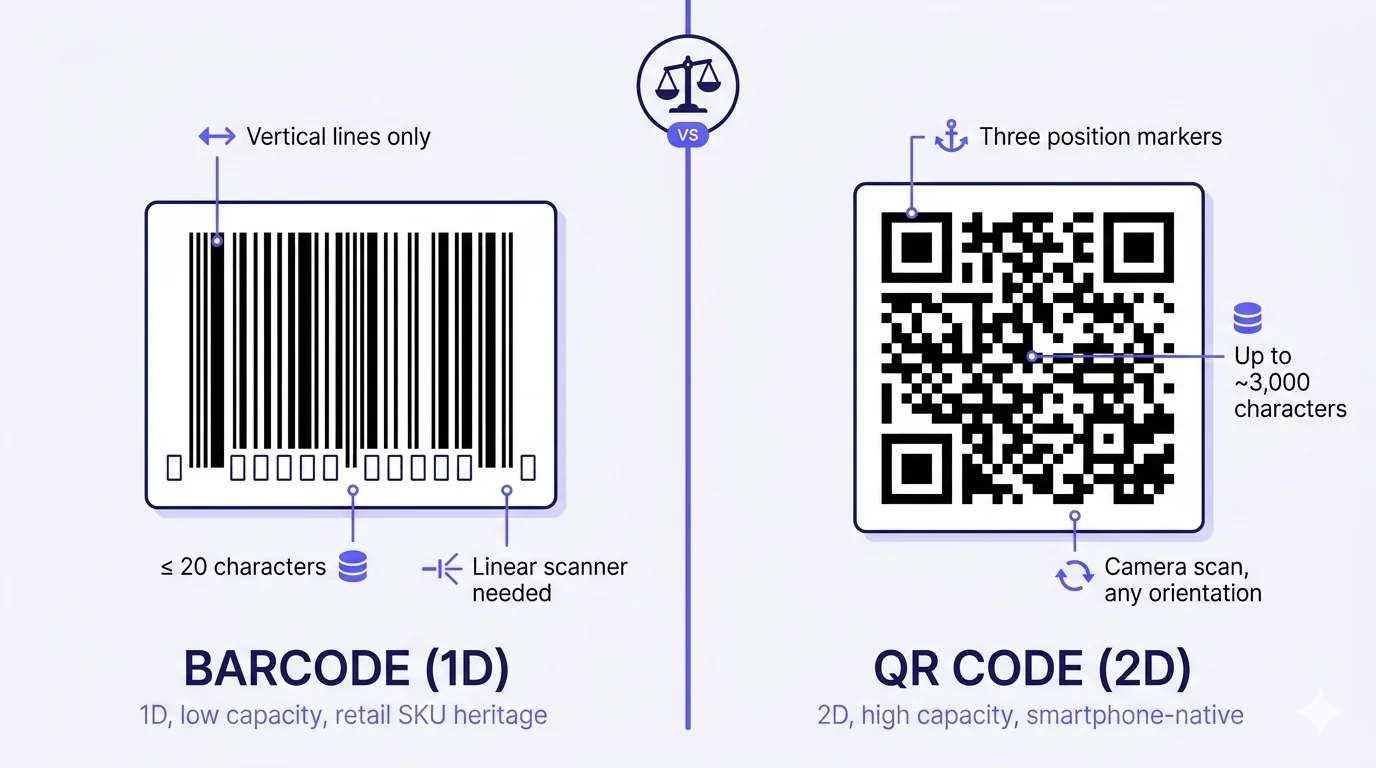
QR Code vs Barcode: The Real Differences (And When to Use Each)
QR codes and barcodes get used interchangeably in conversation, but they're not interchangeable in practice. One is 1D, designed for industrial scanning of fixed product SKUs. The other is 2D, designed for smartphone cameras and rich data. Here's exactly how they differ — capacity, scanning, error correction, history — and when each one is the right tool.
- Troubleshooting
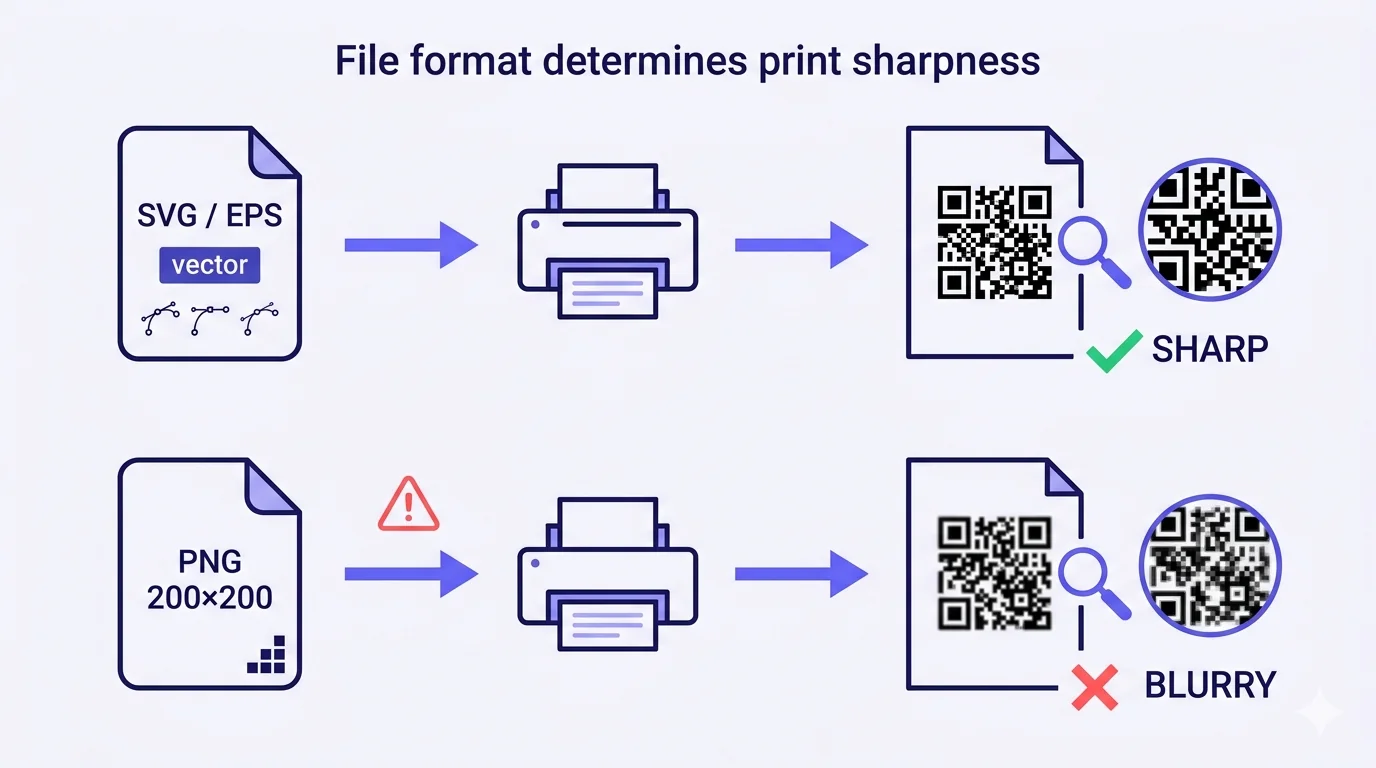
Why Your Printed QR Code Looks Blurry (and How to Fix It Before the Print Run)
Your QR looked crisp on screen and came back from the printer fuzzy, jagged, and unscannable. Almost every case traces to the same root cause: the file you sent the printer was raster (PNG, JPG) at a resolution lower than the printed size demands. The fix is upstream — switch to vector (SVG, EPS, PDF) export and the problem disappears. Here's the full diagnosis.
- How-To Guides
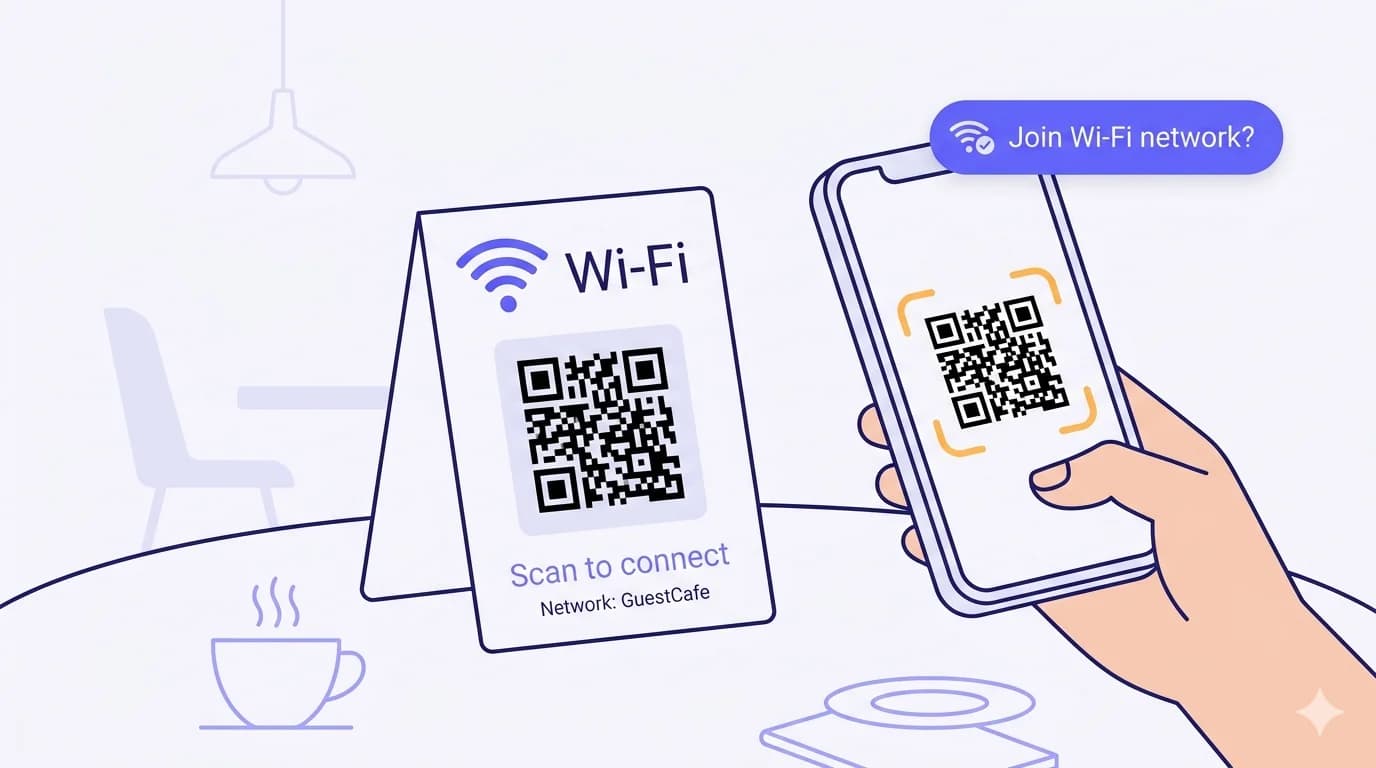
How to Make a Wi-Fi QR Code (And the One Trap Almost Everyone Hits)
Wi-Fi QR codes are one of the most useful QR types — your guests connect by pointing their camera at a card. Cafes, hotels, AirBnBs, offices, conference venues across MENA all use them. The wizard takes a minute. The trap that catches almost everyone: a special character in your Wi-Fi password (Arabic letters, accents, '$', ';', '\', spaces) silently breaks the QR for a meaningful percentage of phones. Here's the full setup plus the encoding edge cases.
- Use Cases
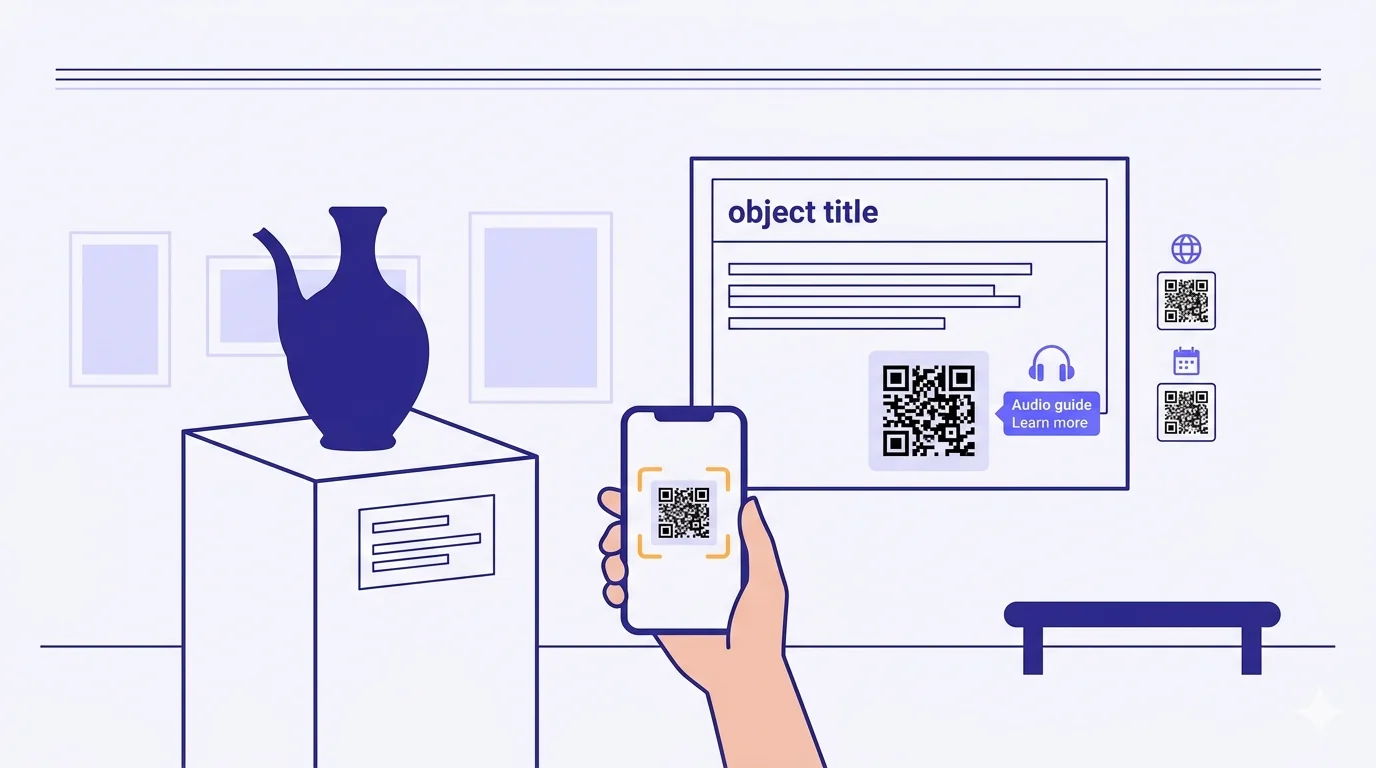
QR Codes for Museums and Cultural Venues Across MENA
MENA is in the middle of a cultural-tourism boom — the Grand Egyptian Museum, Saudi's AlUla and Diriyah, Louvre Abu Dhabi, Qatar's MIA, Morocco's museum modernisation. Audio guides, multilingual exhibit interpretation, timed-entry tickets, and virtual collection access are all natural QR territory. This is the playbook for museum operators, cultural-venue managers, and the agencies designing exhibits across the region.
- MENA Insights
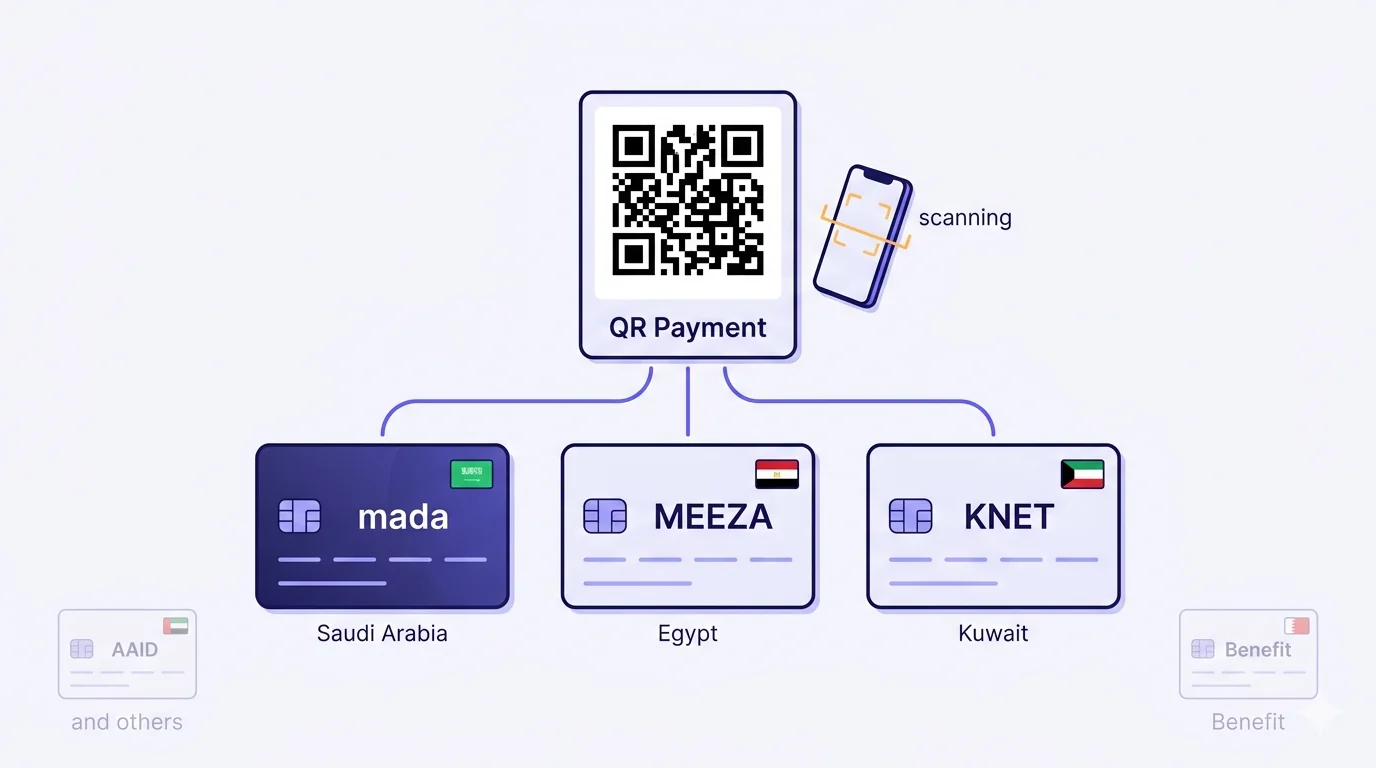
mada, MEEZA, and KNET: The MENA Payment QR Guide
MENA payment QR is not just Visa and Mastercard on different rails. mada in Saudi Arabia, MEEZA in Egypt, KNET in Kuwait, AAID in the UAE, Benefit in Bahrain — these national payment schemes route domestic transactions through different infrastructure with different settlement rules, different cardholder fees, and different fraud profiles. Here's what every MENA business accepting QR payments needs to understand.
- How-To Guides
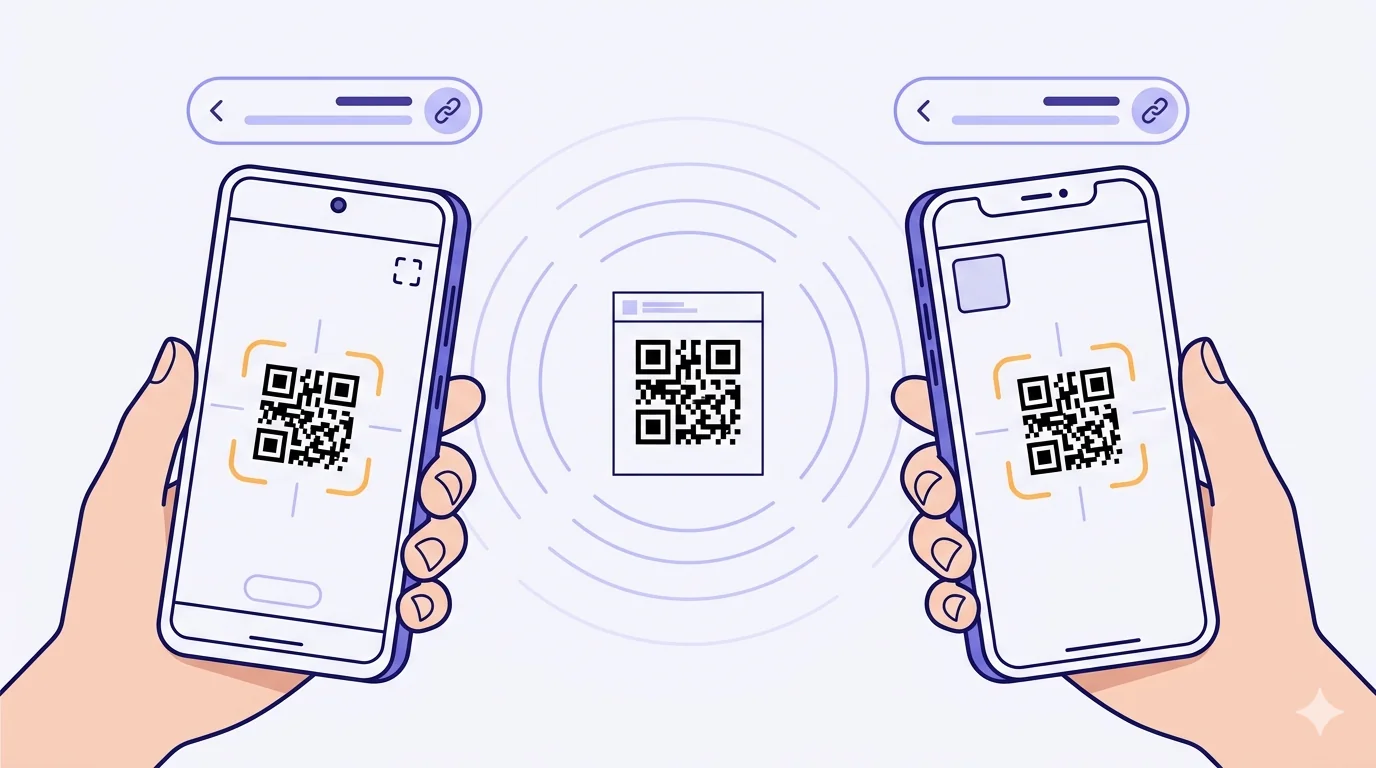
How to Scan a QR Code on iPhone, Android, and Everywhere Else
Scanning a QR code on a modern phone is built into the camera app — no separate scanner app needed since 2017 on iOS and 2018-2019 on Android. But there are still situations where the camera doesn't pick it up, where you want to scan from an image or screenshot, or where you're on a phone old enough that the built-in scanner isn't there. This is the complete guide.
- Troubleshooting
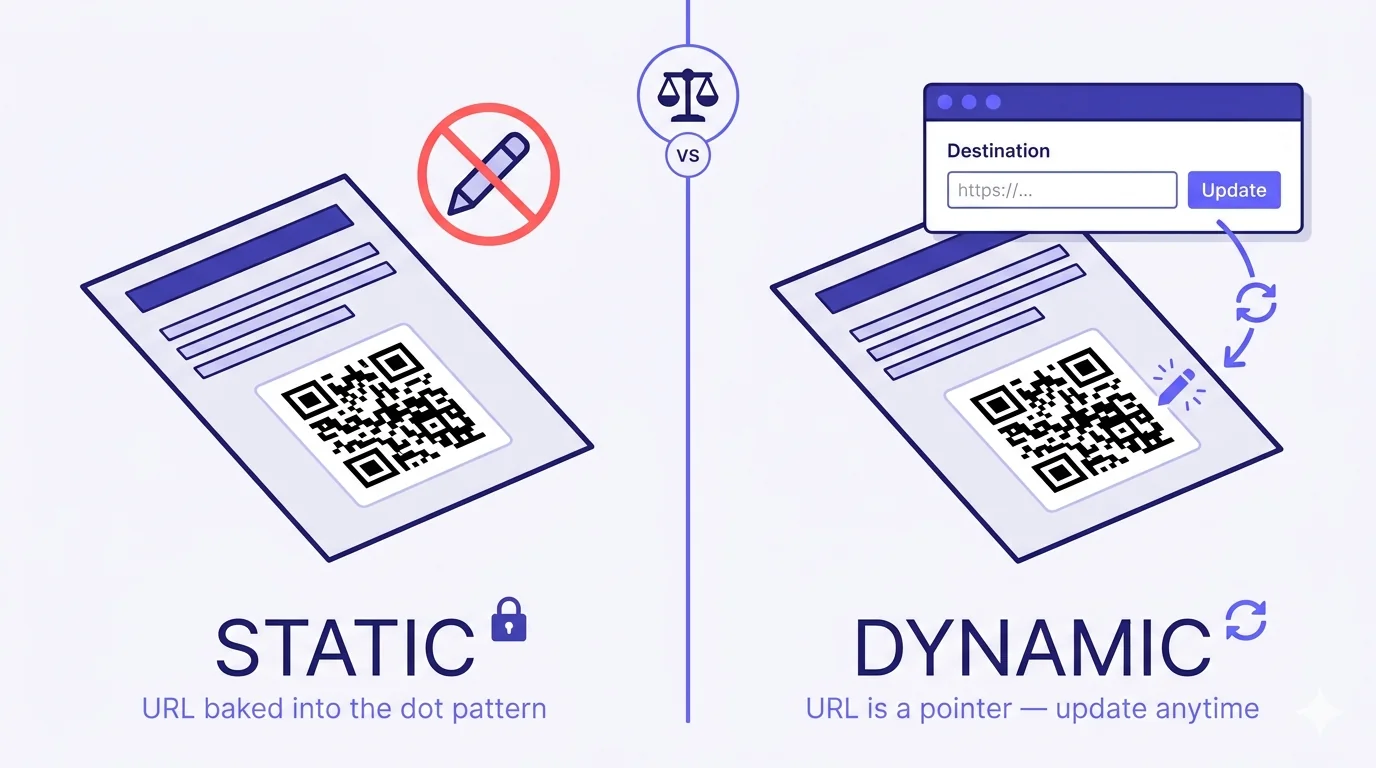
How to Edit a QR Code After Printing (And Why Most Can't)
If your printed QR code points to the wrong place, the answer depends on one thing: did you generate it as a static or a dynamic QR? Static QRs cannot be edited — the URL is baked into the dot pattern. Dynamic QRs can be re-pointed indefinitely. Here's how to tell which one you have, what your options are if you're stuck with a static, and how to never be stuck again.
- Use Cases
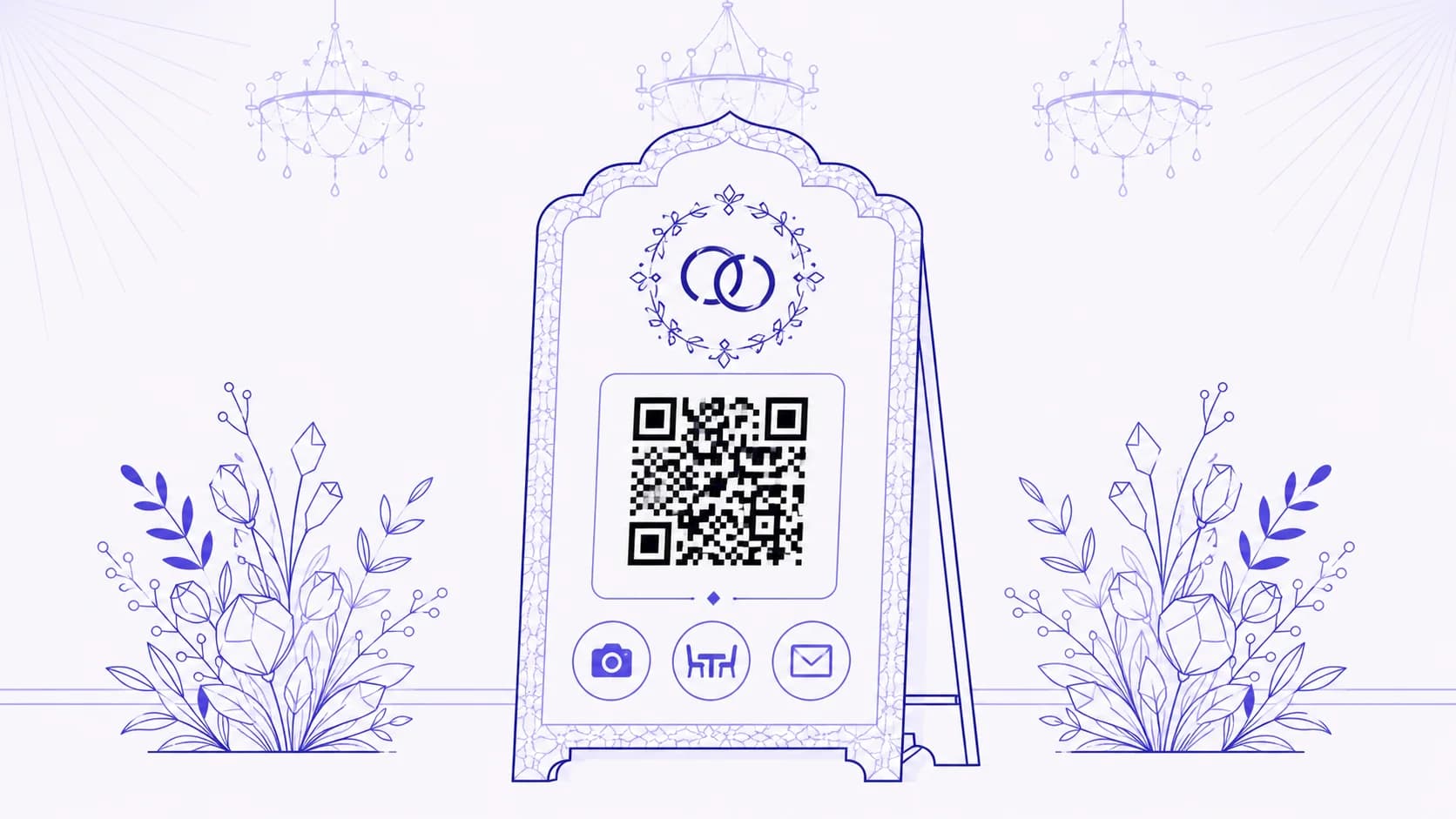
QR Codes for MENA Weddings and Events: A Practical Playbook
MENA weddings run from 200-guest evenings in Cairo to 2,000-guest multi-day celebrations in Riyadh. The logistics problem scales fast — seating, photos, RSVPs, gift registries, live streaming for relatives abroad. QR codes solve every one of those without the planner reprinting anything when a detail changes. Here's the playbook for wedding planners, event venues, and photographers across the region.
- MENA Insights
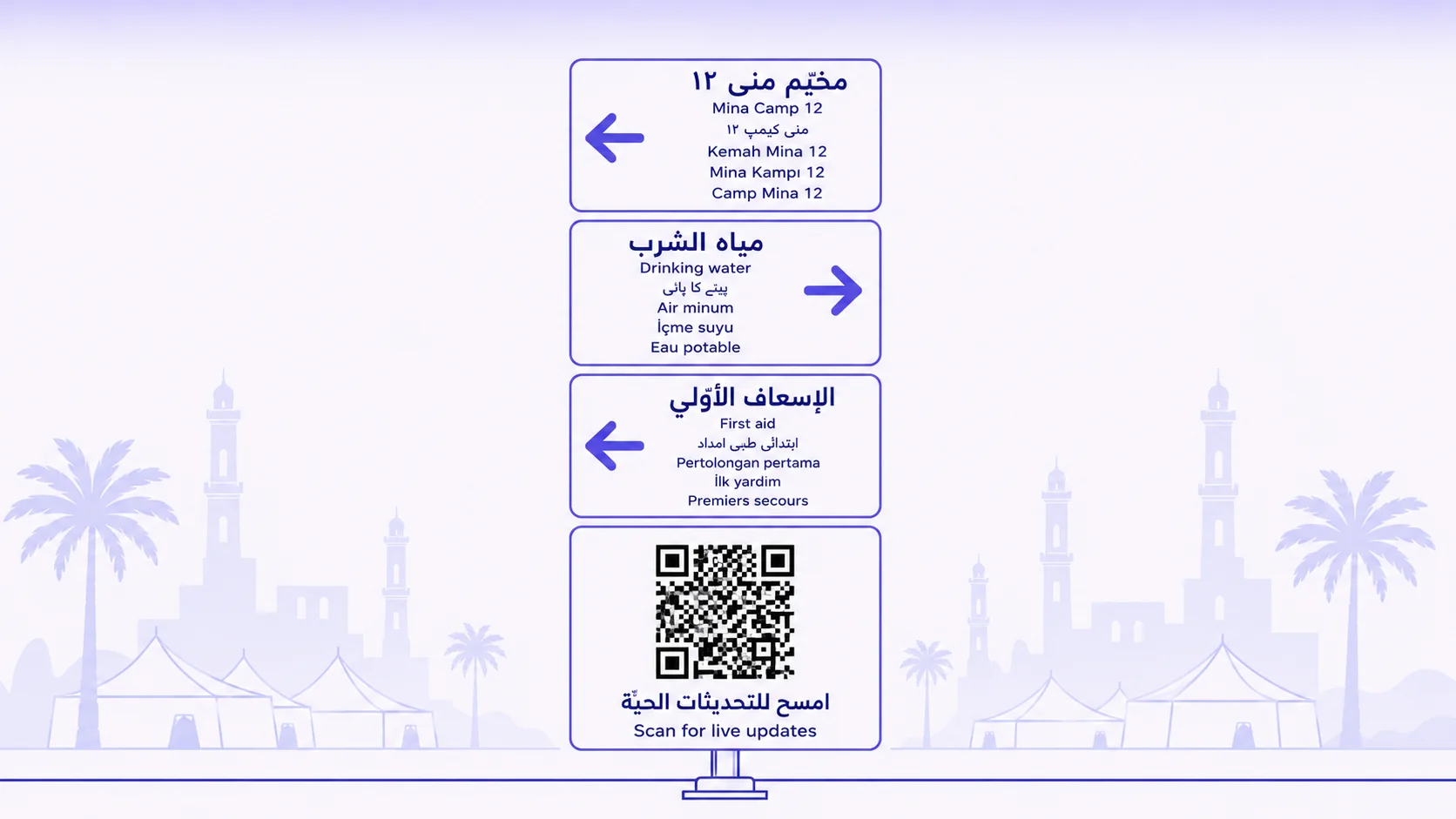
QR Codes for Hajj and Umrah: The 10-Day Logistics Window
Hajj concentrates 2.5 million pilgrims from over 180 countries into a 10-day logistics window. Umrah adds a steady year-round flow of millions more. The signage problem is brutal — six languages, dense crowds, ever-changing schedules, weather extremes. QR codes are the only signage technology that solves it without reprinting. Here's how operators, hotels, and tour groups serving Hajj and Umrah actually use them.
- How-To Guides
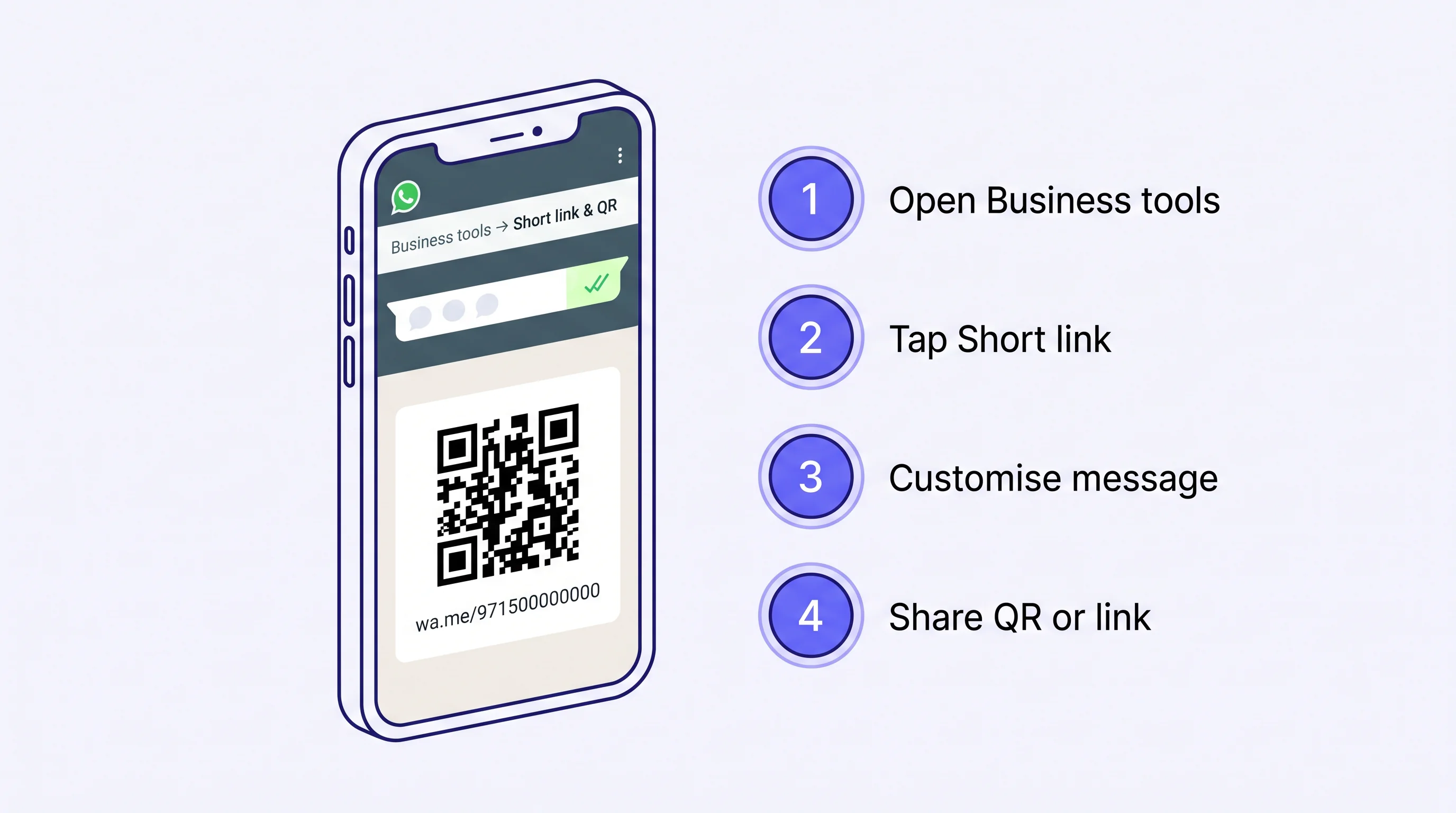
WhatsApp Business QR Code: The Complete MENA Guide
WhatsApp is the dominant business-customer channel across MENA — from Riyadh shawarma joints to Dubai law firms to Cairo clinics. A WhatsApp Business QR code lets a customer go from poster to live chat in two taps, with a pre-filled message that tells you exactly what they want. Here's the four-step path, plus the dynamic-QR trick that lets you change phone numbers without reprinting anything.
- How-To Guides
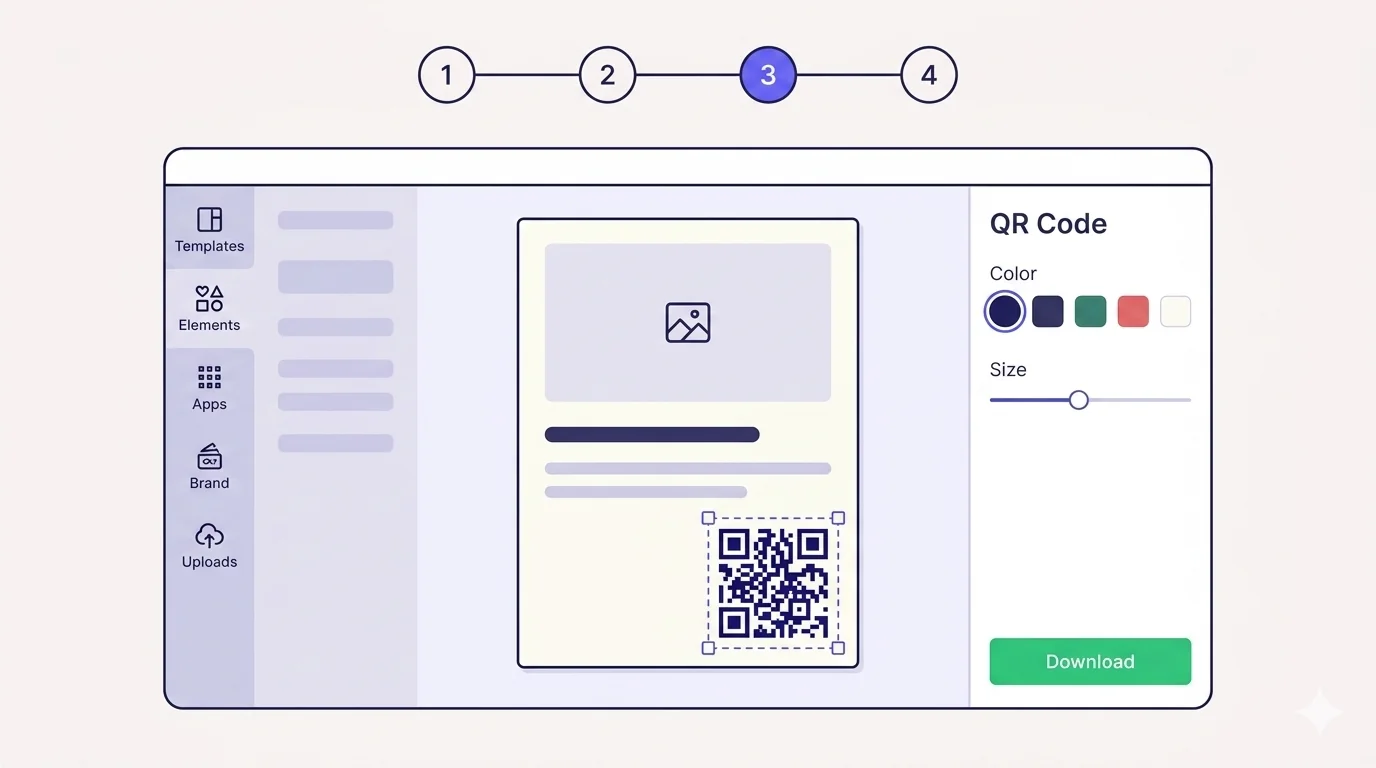
How to Add a QR Code in Canva: A Step-by-Step Guide
Canva is the design tool every MENA SMB and freelancer already uses. Adding a QR code to a Canva design takes four steps and about a minute — but the version most tutorials skip is how to make the QR actually scan once it’s printed. Here’s the full path, plus the print-readiness gotchas.
- MENA
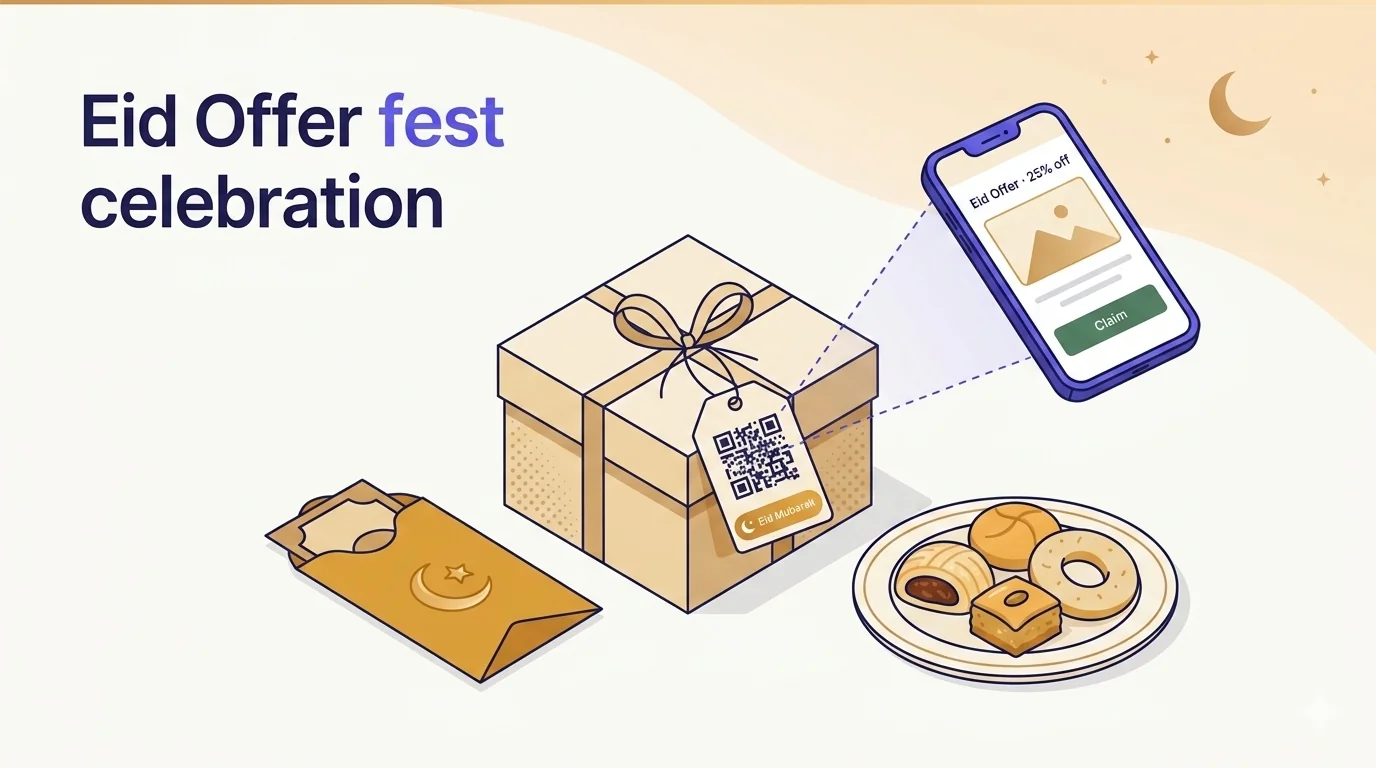
Eid QR Campaigns Across MENA: A Playbook for Eid Al-Fitr and Eid Al-Adha
Eid is a 96-hour buying window that compresses three months of retail intent into four days, twice a year, across the entire Arab world. Here is how to use QR codes to capture it — gift cards, eidiyah flows, family forwarding, and the data that makes next year's campaign easier to plan.
- MENA
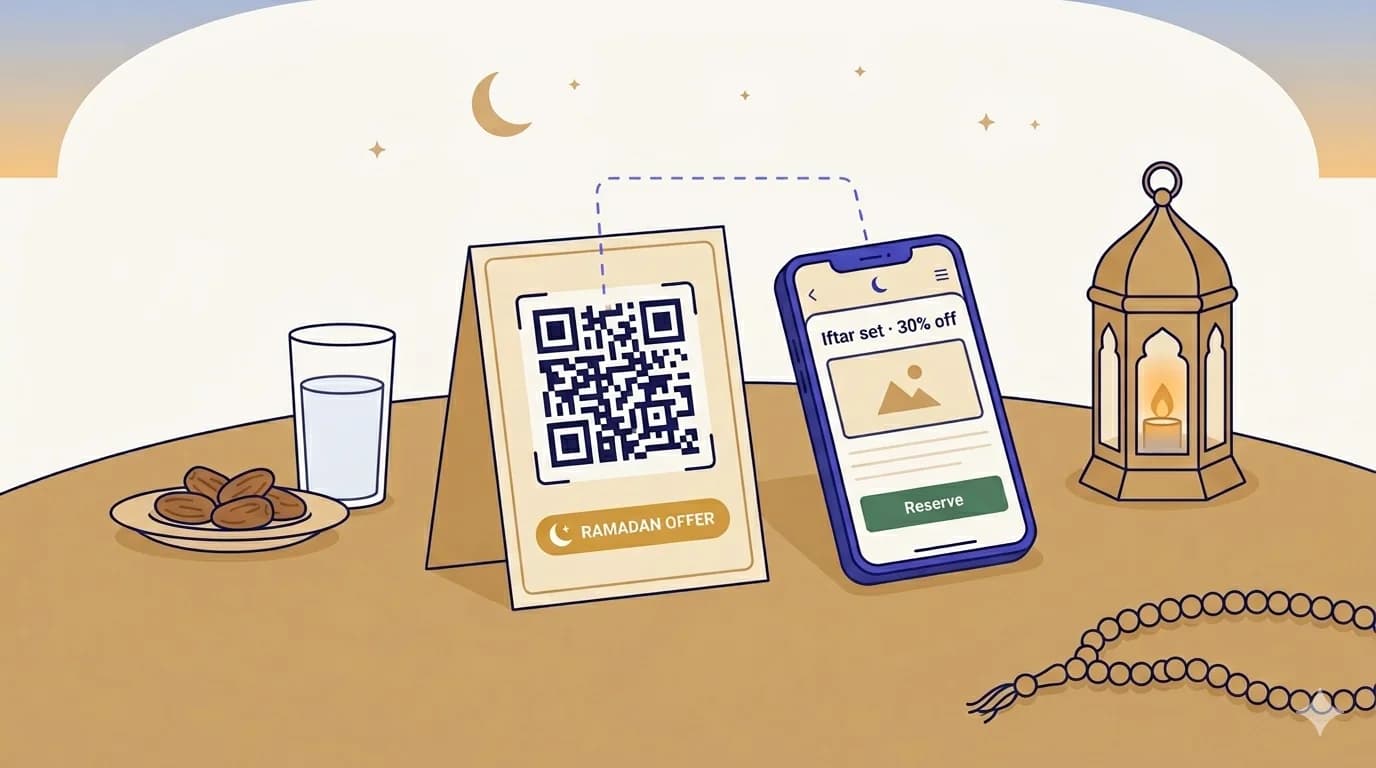
Ramadan QR Marketing Campaigns: A Playbook for MENA Businesses
Ramadan across MENA compresses a year of marketing momentum into one month. QR codes are the cheapest, most measurable bridge between iftar-table footfall and a follow-up that converts. Here is the playbook — campaign types, the specific QR plays that work, and the data you actually want to capture.
- Saudi Arabia
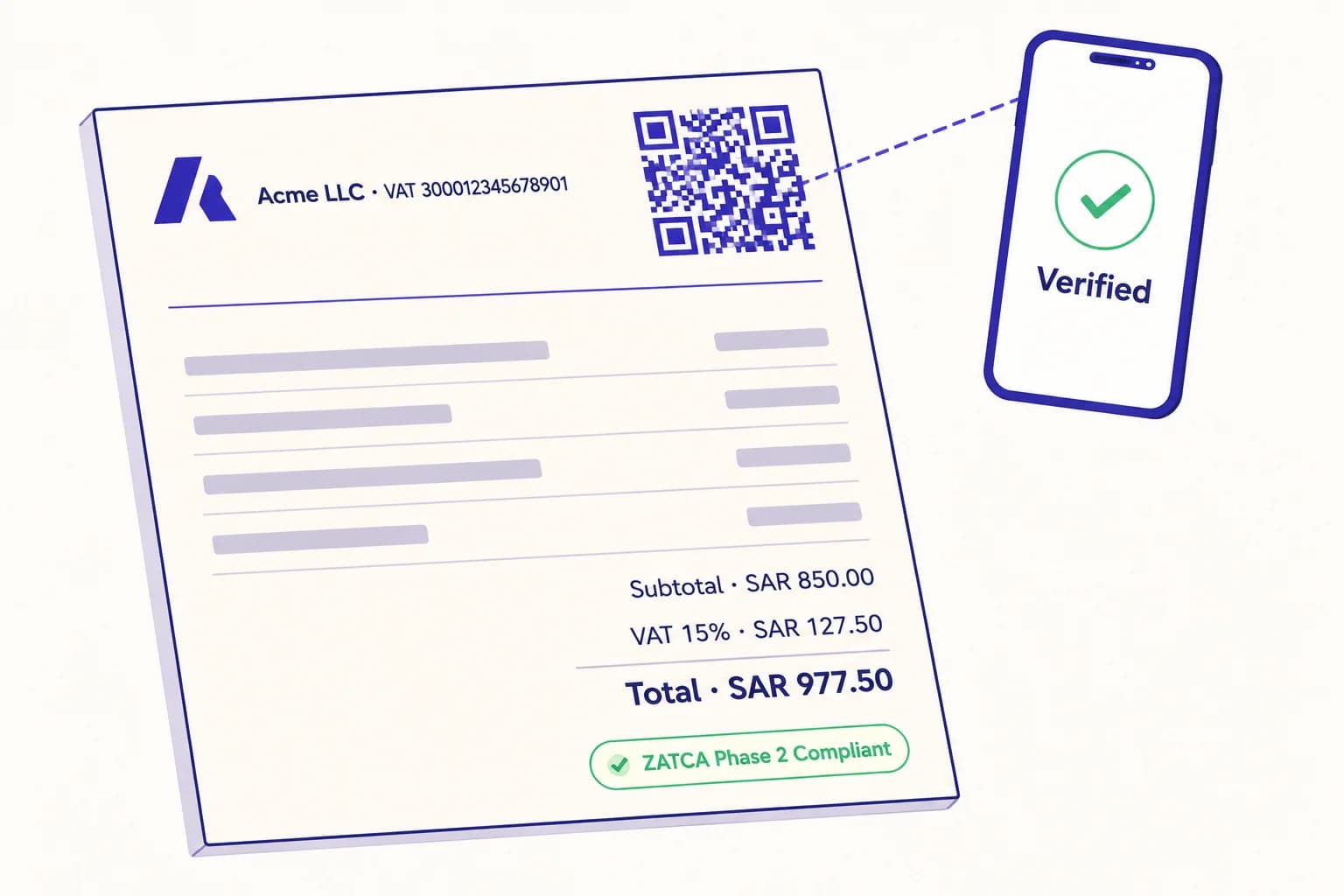
ZATCA Phase 2 E-Invoicing: What Saudi Businesses Need to Know About QR Codes
Every Saudi simplified tax invoice now has to carry a QR code that encodes specific TLV-formatted data. Here’s what the QR has to contain, when it’s mandatory, how verification works, and the common implementation mistakes Phase 2 introduces.
- Use Cases
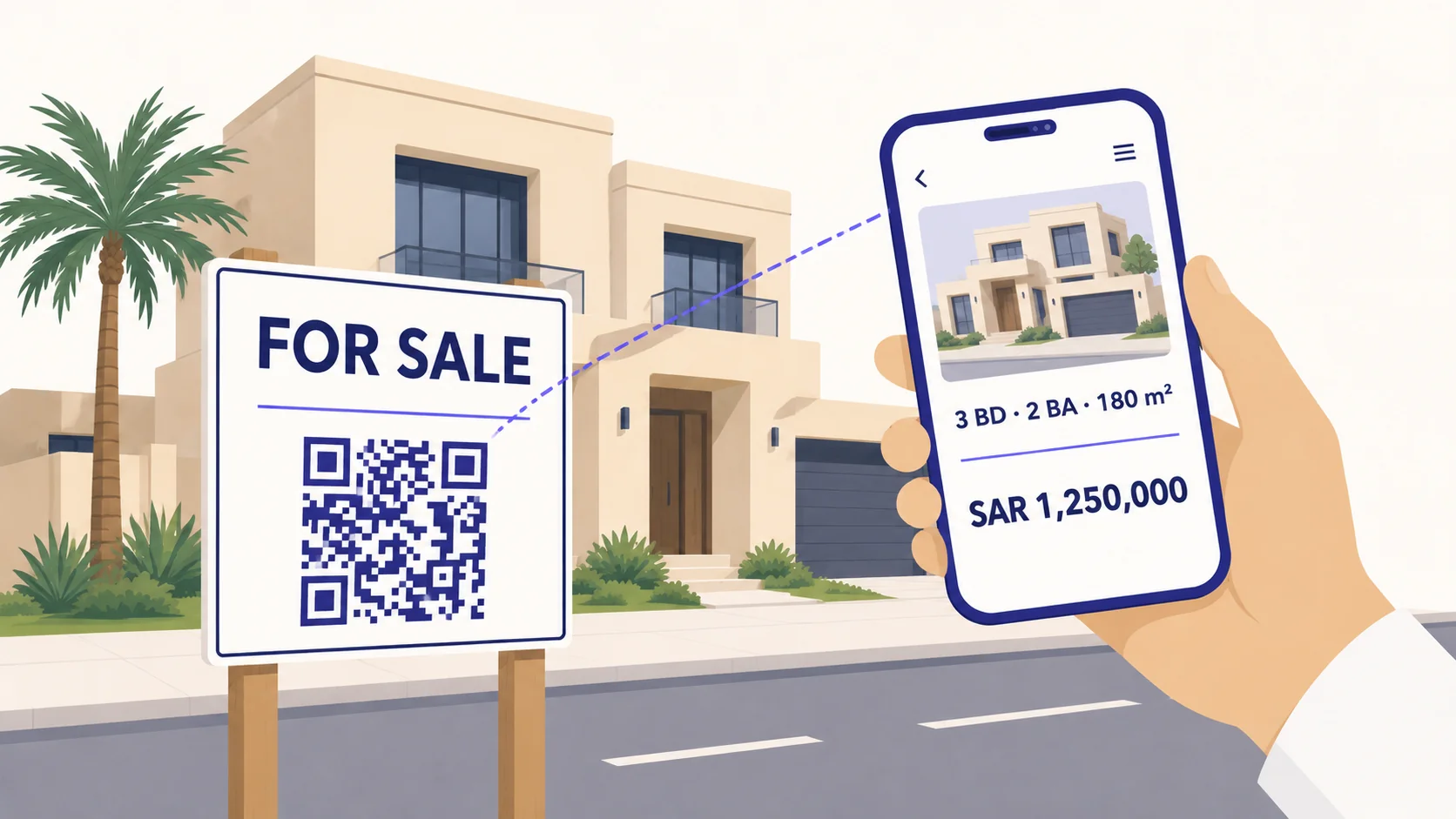
QR Codes for Real Estate: Yard Signs That Update Themselves
Every yard sign printed today is locked the day it goes up. A dynamic QR code unlocks live pricing, virtual tours, and per-listing analytics — without reprinting a single sign.
- Use Cases
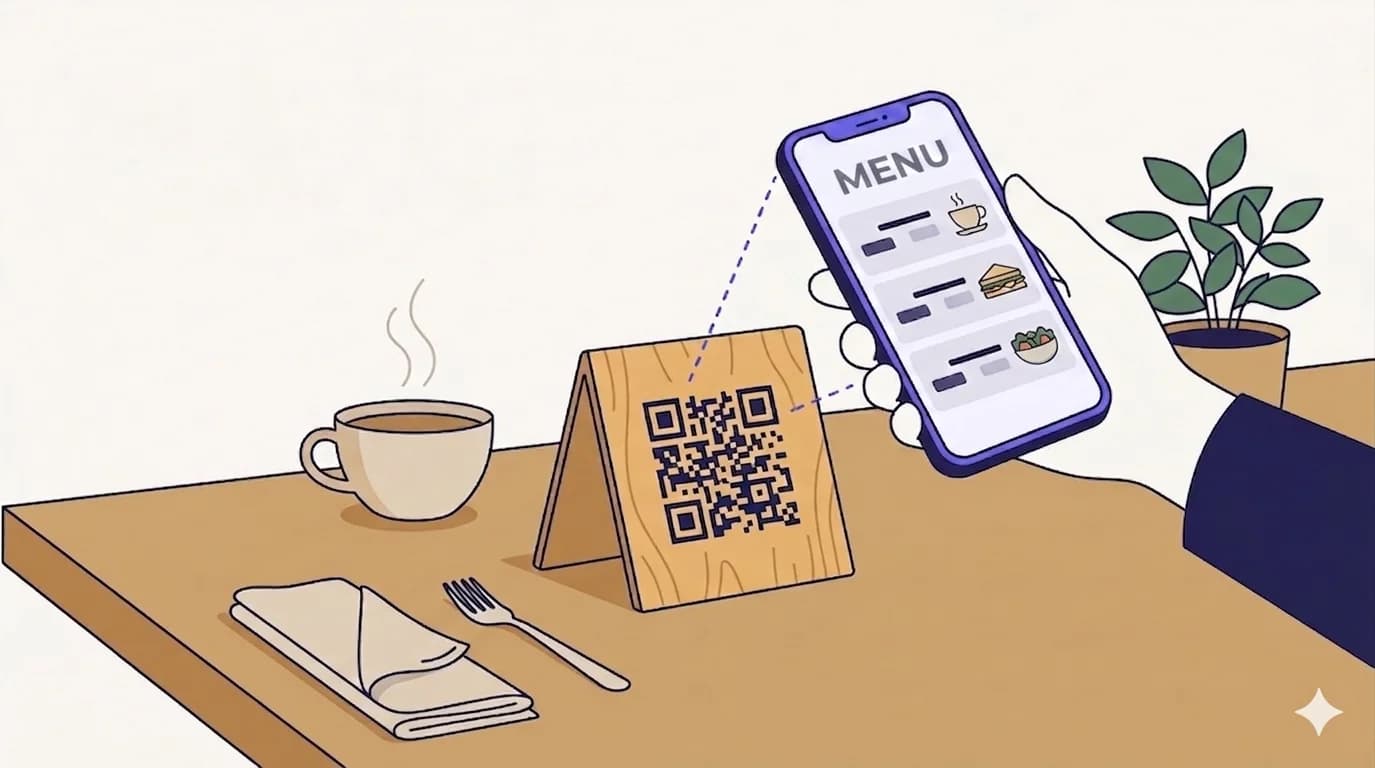
QR Menus for Restaurants: Menus, Ordering, and Customer Feedback
QR menus aren’t a COVID hangover anymore — across MENA they’re table stakes. Here’s how a single QR can carry three jobs (menu, ordering, feedback) without making the dining experience feel like a checkout, plus the bilingual and design choices that win in Arabic-speaking markets.
- Troubleshooting
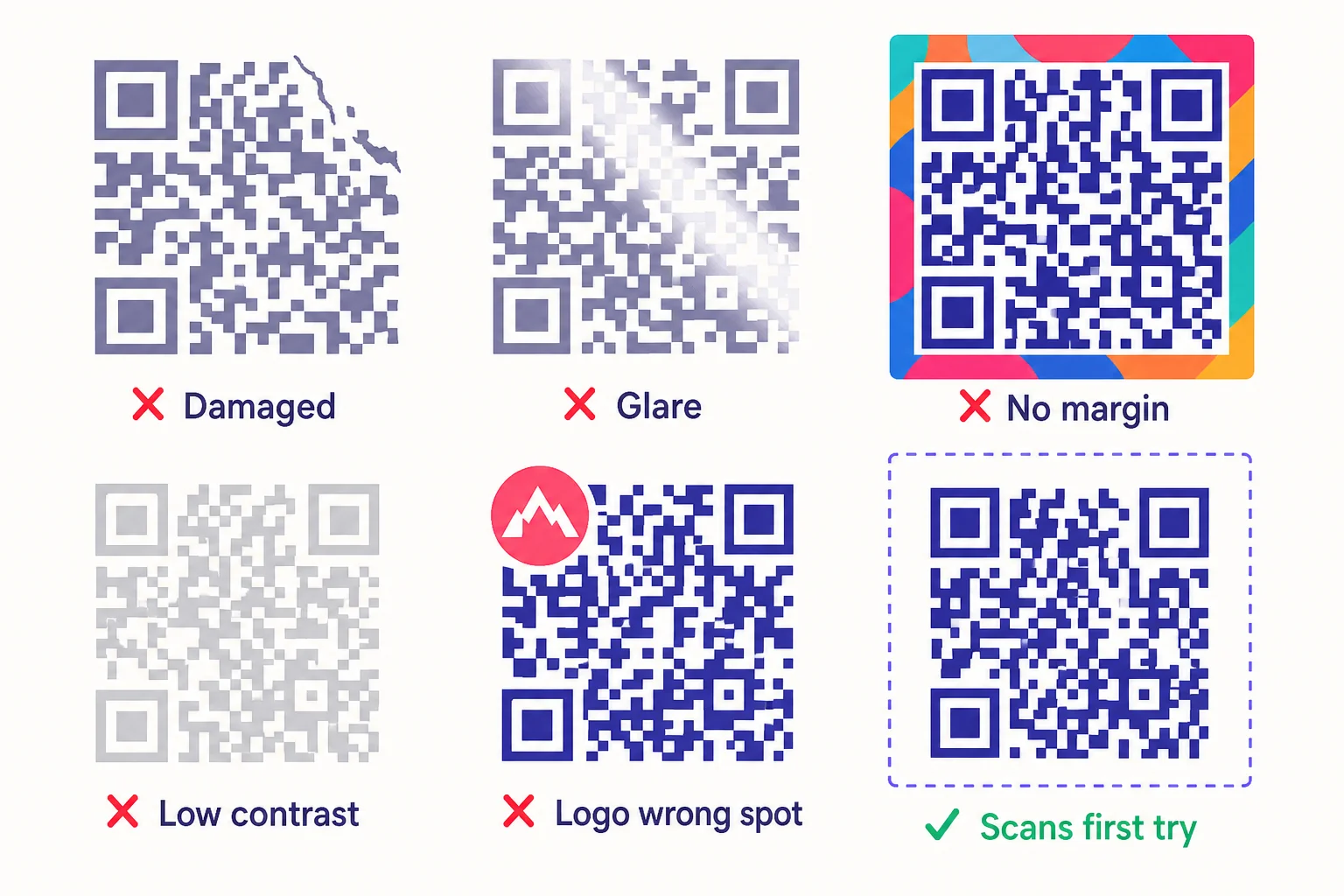
Why Your QR Code Won’t Scan — 9 Fixes That Actually Work
QR codes that don’t scan rarely fail for one big reason. Here are the nine specific fixes — quiet zone, contrast, error correction, size, surface, logo placement, browser, and more — ranked by how often they’re actually the culprit.
- QR Code Basics
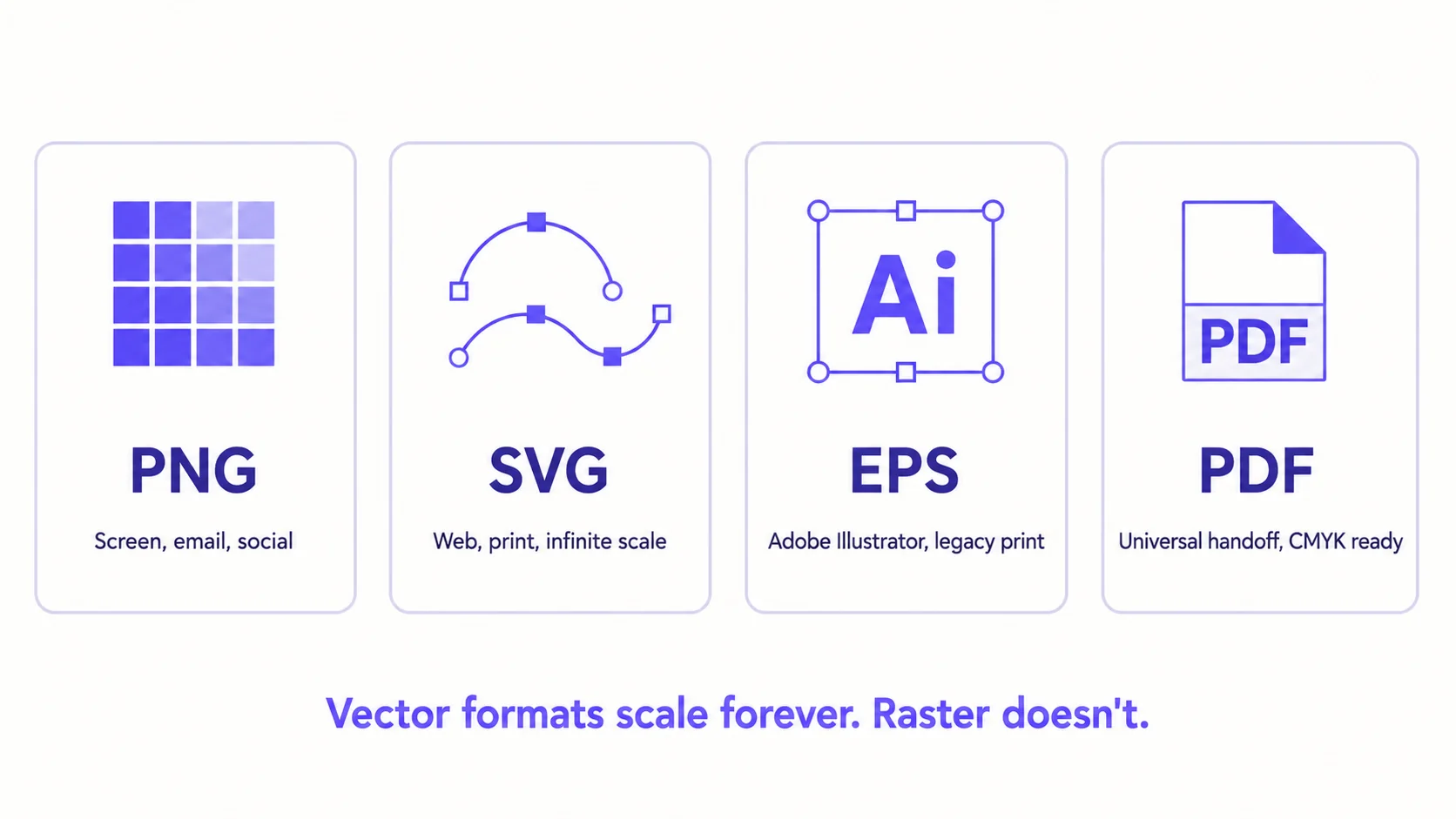
PNG, SVG, EPS, or PDF? Which QR Code Export to Send to Your Printer
Raster vs. vector, screen vs. print, modern vs. legacy. A plain-English guide to the four QR export formats — and the one rule that decides which to use.
- QR Code Basics
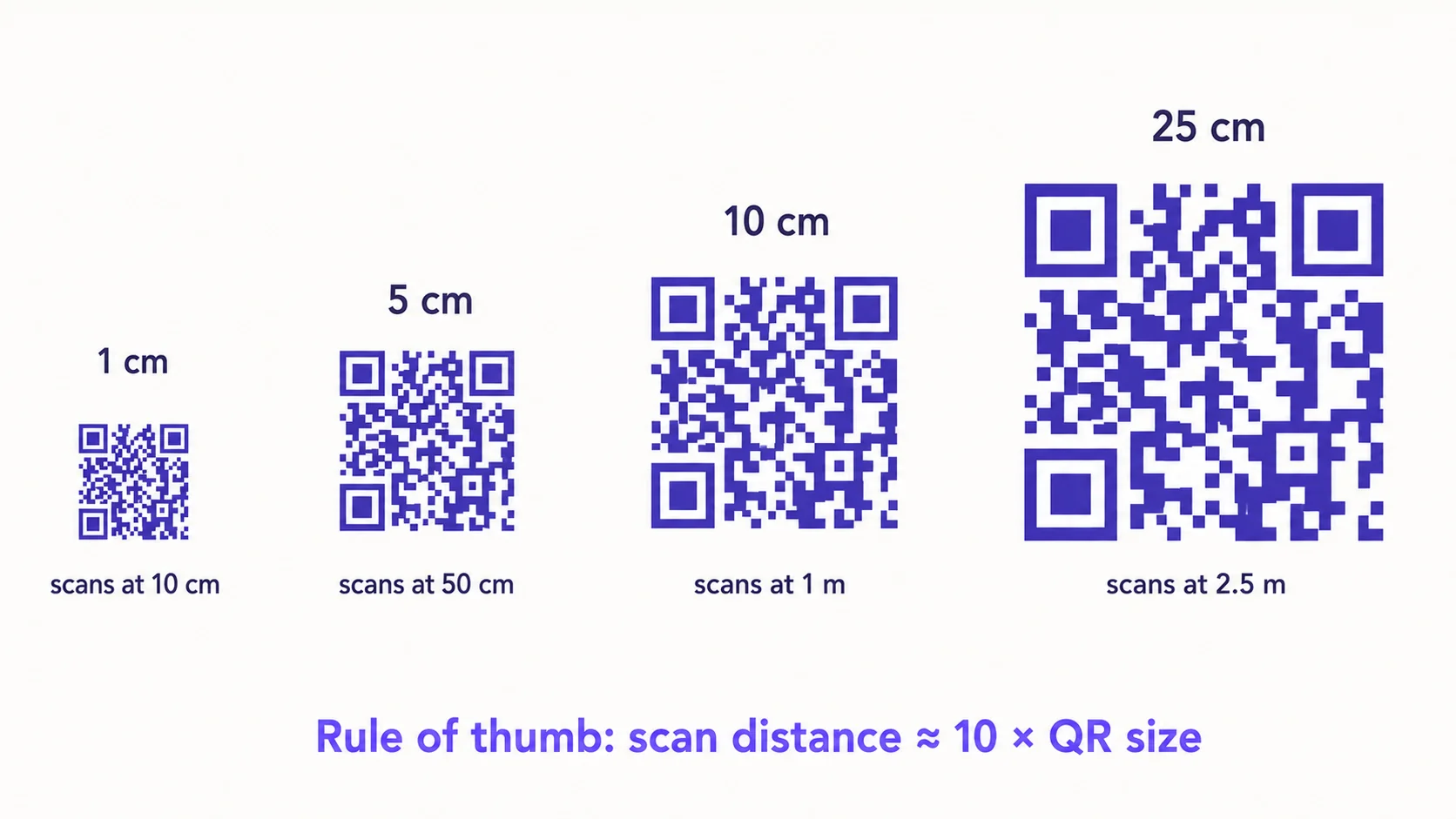
How Big Should a Printed QR Code Be? — The 10:1 Rule and Print Sizing Guide
Scan distance is roughly ten times the printed QR size. Here’s the practical sizing chart — from 1 cm loyalty cards to 1 m billboards — plus the conditions that compress the rule.
- QR Code Basics
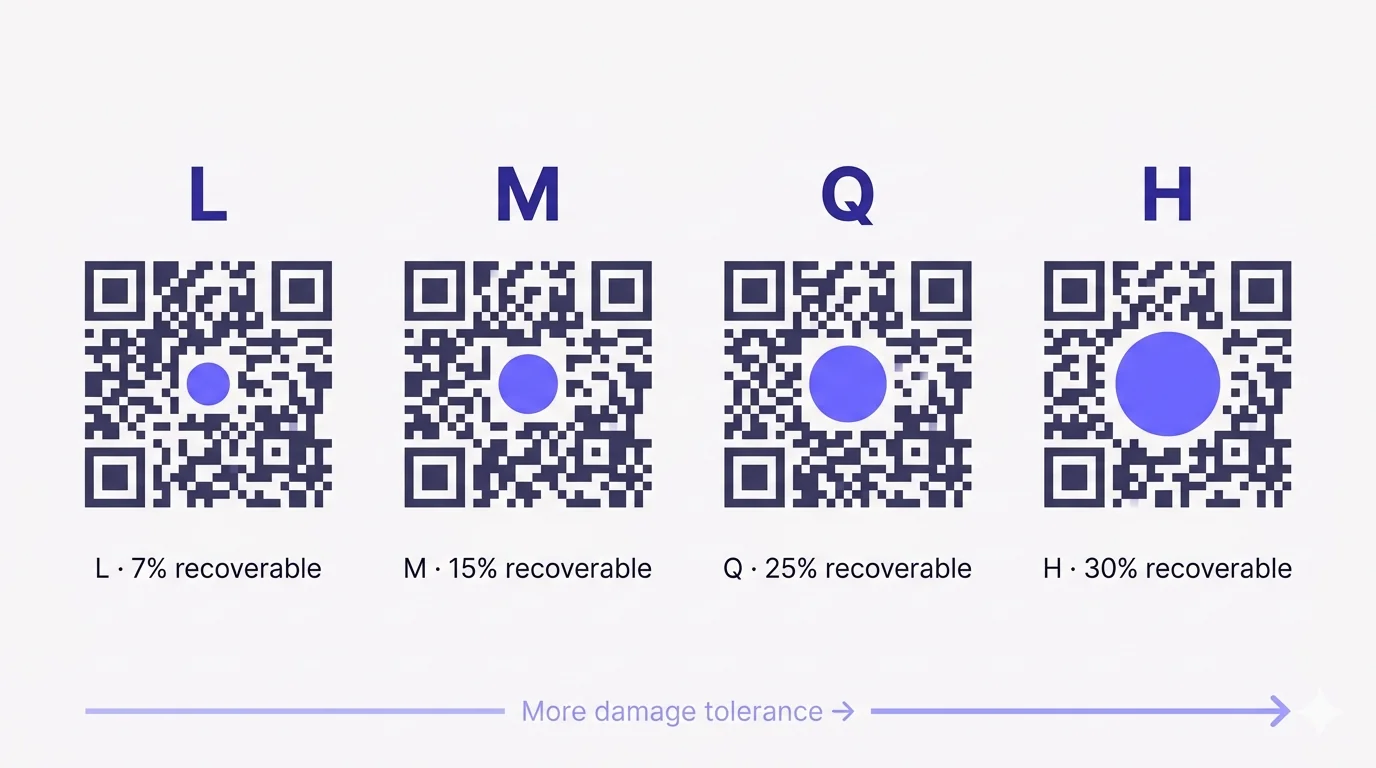
Error Correction Levels Explained — How Much Logo Can a QR Code Take?
Every QR code carries spare data so it still scans when part of it is damaged or covered. Here’s what L, M, Q, and H actually mean — and how much of your logo each level can absorb before scans start failing.
- QR Code Basics
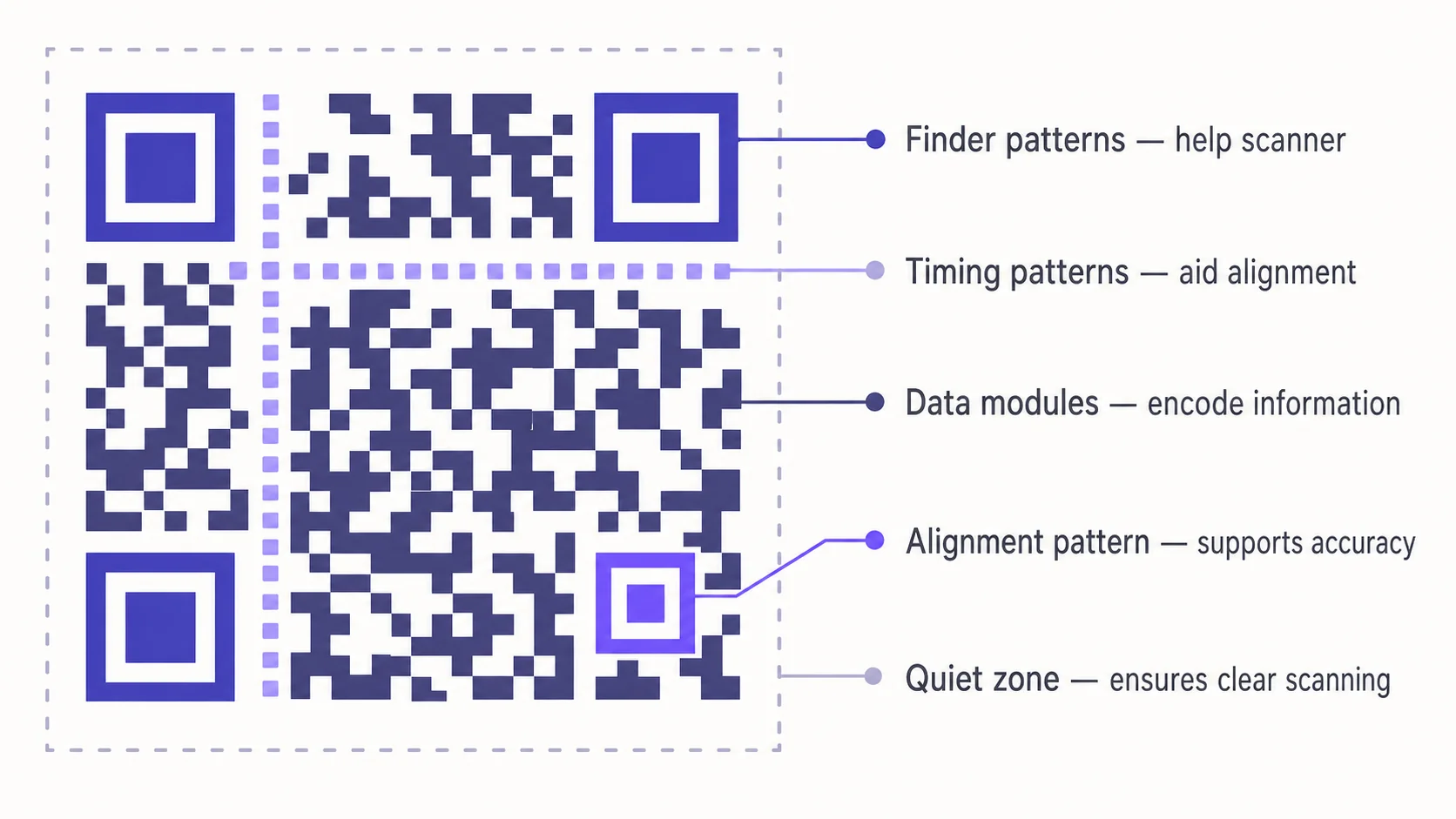
Anatomy of a QR Code — What Every Square Actually Does
Finder patterns, alignment patterns, timing rows, data modules, and the quiet zone — a plain-English breakdown of every part of a QR code and why scanners need each one.
- QR Code Basics
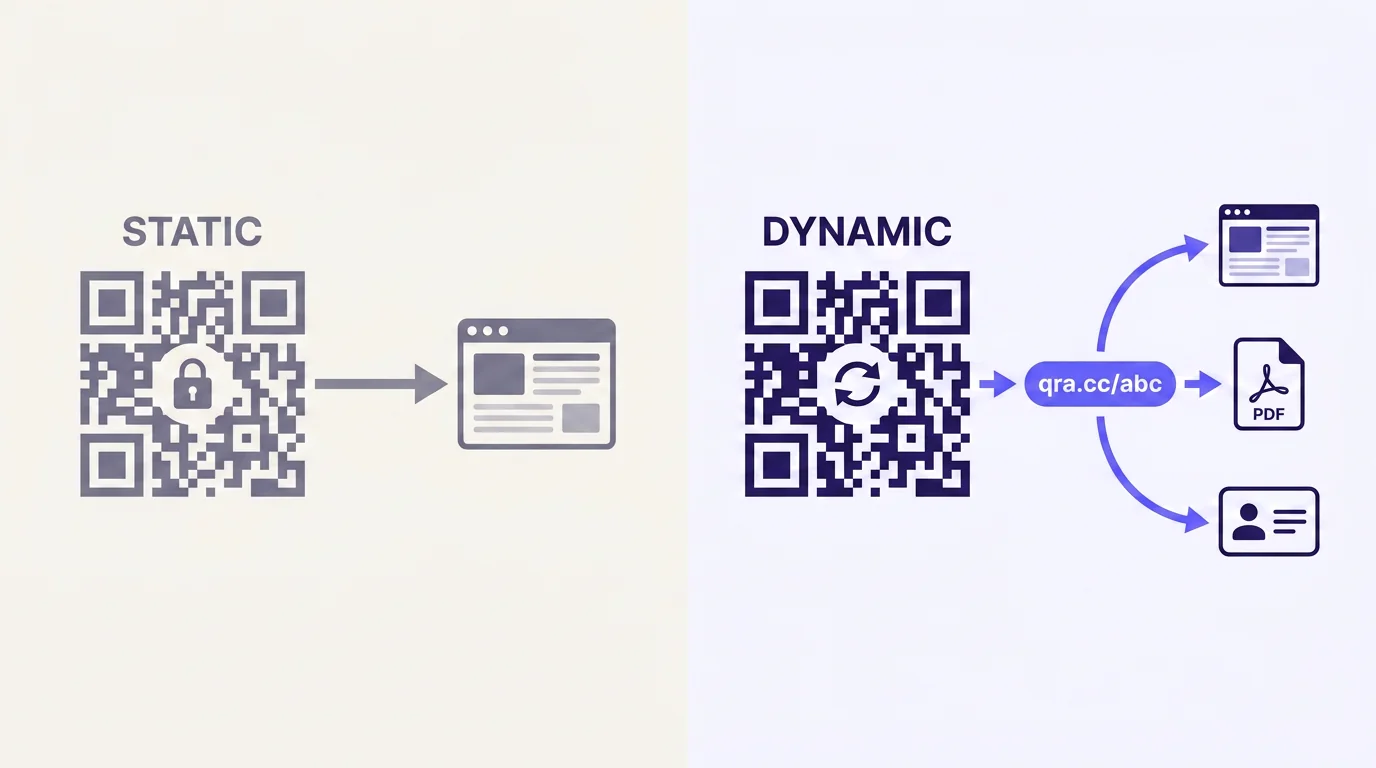
Static vs. Dynamic QR Codes — When to Use Which
Static QRs lock the destination forever. Dynamic QRs route through a short URL you can re-point anytime — and unlock analytics, scheduling, and targeting. Here's how to choose.